- Views: 3K
- Replies: 8
India’s push to develop its indigenous fifth-generation Advanced Medium Combat Aircraft (AMCA) is drawing considerable scrutiny from Chinese defence circles.
Military observers in China widely characterise the programme as a highly ambitious endeavour, though they assert it remains too distant to disrupt current regional air power dynamics.
While these perspectives stem from state-affiliated commentators and defence researchers rather than formal government policy, they provide a window into how China assesses India's pursuit of cutting-edge stealth capabilities.
A prominent narrative among Chinese analysts is the widening technological gulf between the People’s Liberation Army Air Force (PLAAF) and the Indian Air Force (IAF).
Observers frequently highlight China’s extensive operational history with the Chengdu J-20, which has been in active service since 2016 and is now estimated to boast a fleet of around 500 aircraft.
In contrast, they note that India’s absence of an active fifth-generation fighter forces the IAF to rely heavily on upgraded fourth and 4.5-generation jets, such as the Rafale and Su-30MKI, as the AMCA navigates its developmental phases.
Chinese defence commentary routinely underscores that the AMCA has not yet flown a prototype, drawing sharp comparisons with Beijing’s well-established and rapidly expanding stealth fighter production lines.
By pointing to this disparity, analysts argue that New Delhi confronts immense industrial and technological hurdles in its bid to match China’s mature fifth-generation aerospace ecosystem.
Open-source timelines indicate India expects to roll out its first AMCA prototype by late 2026 or early 2027, with a maiden flight projected for 2028 or 2029.
Timeline feasibility remains a major point of skepticism for Chinese observers. Pointing to historic schedule overruns in India’s past aviation projects, commentators speculate that the AMCA will inevitably face similar delays.
They emphasise the extreme complexities involved in mastering low-observable stealth airframes, advanced sensor fusion, next-generation electronic warfare systems, and high-performance propulsion—engineering feats that routinely stretch development cycles even for nations with highly advanced aerospace sectors.
Propulsion technology is another focal point for Chinese scrutiny.
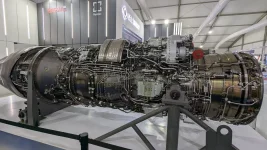
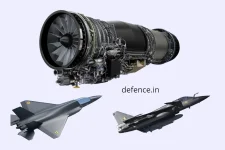
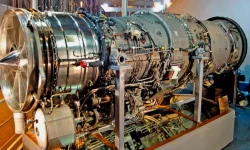
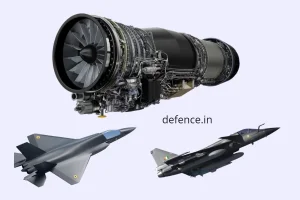
The initial AMCA Mk1 variant will be powered by the American General Electric F414 engine, while the more advanced Mk2 is slated to use a new 110-kilonewton engine, expected to be co-developed with international partners like France's Safran.
Chinese analysts frequently argue that relying on imported or jointly developed engines could introduce further bottlenecks and delay timelines.
Indian officials, however, maintain that these strategic technology partnerships are deliberately designed to cultivate robust domestic engine manufacturing capabilities in the long run.
Despite the skepticism, recent tangible milestones in the AMCA programme have not gone unnoticed.
Following the Cabinet Committee on Security's approval of a ₹15,803 crore ($1.7 billion) budget for prototype development in early 2024, the issuance of Requests for Proposal (RFPs) to private-sector industry consortia marks a significant shift in India’s approach.
This transition toward a competitive model involving private and public defence firms is recognised by Chinese observers as a sign of forward momentum. However, they maintain that the true test for India will be bridging the gap between prototype design and efficient serial production.
Strategically, Chinese military thinkers tend to frame the AMCA not as an immediate threat, but as a long-term balancing mechanism.
They project that by the time India’s stealth fighter achieves operational readiness—anticipated around 2034 or 2035—the PLAAF will have significantly expanded its J-20 inventory and likely introduced sixth-generation combat systems and advanced unmanned platforms.
This viewpoint underscores Beijing’s deep-seated confidence in its aerospace manufacturing supremacy, viewing India's AMCA as a gradual, decades-long effort to merely narrow an expanding technological chasm.
To offset this disparity during the AMCA's gestation period, Chinese analysts highlight India’s strategic interim investments.
They note that the IAF is actively bolstering its combat readiness by upgrading its existing Su-30MKI fleet, inducting indigenous Tejas Mk1A fighters, procuring additional Rafale jets, and deploying sophisticated air defence networks like the Russian-made S-400.
These platforms are viewed as critical stopgap measures designed to maintain regional deterrence until a homegrown stealth fighter takes to the skies.
Yet, the narrative crafted by Chinese commentators often overlooks the broader strategic utility of the AMCA project.
Beyond simply delivering a fifth-generation fighter, the massive state initiative is a foundational investment intended to build indigenous expertise in stealth design, complex systems integration, and advanced aerospace manufacturing.
For India, mastering these critical technologies is essential to seeding future combat aircraft programmes and permanently reducing its historical reliance on foreign defence suppliers.
Ultimately, it is crucial to separate the rhetoric of Chinese defence analysts from official state policy. The government in Beijing has refrained from issuing any formal diplomatic or political statements regarding the AMCA programme.
The ongoing critiques and timeline projections stem primarily from state-affiliated military journals, researchers, and prominent commentators, representing a prevailing analytical consensus rather than an official declaration of the Chinese government.