The Indian Air Force (IAF) is reportedly exploring the possibility of acquiring a second Boeing KC-135 Stratotanker on a wet lease from the American military contractor, Metrea Management.
This potential addition aims to serve as an immediate stopgap measure, enhancing India's mid-air refuelling strength while long-term procurement plans for dedicated tankers remain underway.
According to informed sources, this new proposal is gaining momentum following the excellent performance of the initial KC-135 aircraft.
Arriving at the Agra Air Force Station in November 2025 after an initial contract was signed in March 2025, the first tanker has been actively utilised for both routine training and active operational missions.
The current Stratotanker operates under a comprehensive wet-lease agreement. Under this framework, Metrea supplies not just the aircraft, but also the flight crew, maintenance staff, and complete technical support under the oversight of the Federal Aviation Administration (FAA).
This turnkey solution has allowed the IAF to instantly leverage aerial refuelling without investing time and resources into developing internal training programmes or maintenance infrastructure.
Thus far, the leased KC-135 has been crucial in keeping Indian fighter pilots proficient in the complex skill of mid-air refuelling. With the aircraft equipped with Multi-Point Refueling System (MPRS) pods, it successfully services probe-equipped fighters.
The smooth integration of this first aircraft has prompted military planners to consider a second tanker, which would further ease scheduling bottlenecks and allow for concurrent support across multiple deployments and training scenarios.
Aerial refuelling is a critical force multiplier for the IAF, especially given the strategic defence requirements along the northern and western borders. A reliable tanker fleet exponentially increases the flight duration and combat range of combat jets.
It enables them to carry heavier payloads and execute deep-penetration strikes or sustained air defence patrols without the need to return to forward operating bases.
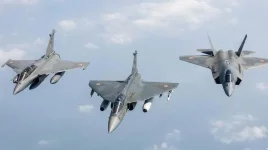
These mid-air refuelling capabilities are indispensable for the frontline fighter squadrons, including the Sukhoi Su-30MKI, Dassault Rafale, and Mirage 2000. Additionally, the KC-135 can support the Indian Navy's long-range maritime patrol aircraft like the P-8I, making it a highly valuable joint-use asset.
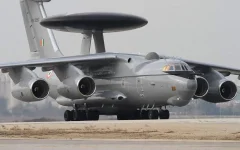
At present, the IAF relies on a fleet of six Russian-made Ilyushin IL-78MKI refuellers, which were first inducted in 2003.
However, these critical assets have been plagued by severe maintenance challenges and a lack of reliable manufacturer support, causing their operational availability to drop below the target of 70 percent, and frequently below 50 percent.
Leasing additional aircraft provides an immediate, practical workaround to ensure readiness without waiting for a complex acquisition process to conclude.
The wet-lease strategy brings considerable operational flexibility to the armed forces.
Because Metrea retains ownership and maintenance responsibilities, the IAF can scale its refuelling capacity up or down based on strategic needs, avoiding the massive capital expenditure typically associated with purchasing large military platforms outright.
This interim leasing strategy is unfolding while the Ministry of Defence continues to search for a new generation of Multi-Role Tanker Transport (MRTT) aircraft.
Over the past decade, efforts to acquire advanced platforms like the Airbus A330 MRTT or the Boeing KC-46 Pegasus have been repeatedly stalled by bureaucratic delays.
Consequently, the IAF must rely on its ageing IL-78s and innovative commercial leasing solutions to maintain a robust defence posture.
Defence industry analysts suggest that securing a second leased KC-135 from Metrea—which boasts the world's largest commercial tanker fleet following its acquisition of former French Air Force tankers—would guarantee that Indian pilots maintain top-tier refuelling skills.
Ultimately, this ensures that the Air Force is adequately prepared for rapid deployments, military exercises, and any unforeseen contingencies.