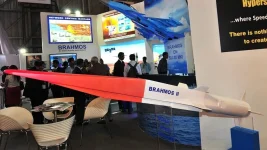
India's premier defence research agency has confirmed that the highly anticipated BrahMos-NG (Next Generation) supersonic cruise missile is steadily progressing toward its inaugural flight trials, scheduled for later this year in late 2026.
The Chief of the Defence Research and Development Organisation (DRDO) stated that foundational ground-level engine testing and overall design validations were successfully concluded late last year.
This ambitious programme aims to drastically improve operational deployment across air, land, and naval forces.
Furthermore, the DRDO chief noted that the strike range of existing land-based BrahMos systems will also see continuous enhancements in the coming years.
A product of the successful joint venture between India's DRDO and Russia's NPO Mashinostroyenia, the BrahMos-NG represents a revolutionary step forward in missile technology.
Engineers have designed the new variant to be approximately 50 percent lighter (weighing roughly 1.5 tonnes) and nearly three metres shorter (measuring around six metres) than the original BrahMos.
Despite its compact footprint, the missile is expected to achieve blistering speeds of up to Mach 3.5.
A major highlight of the upgraded system is its indigenous Active Electronically Scanned Array (AESA) radar seeker.
This state-of-the-art sensor will provide superior resistance to enemy electronic warfare and jamming attempts, dramatically improving the missile's ability to track and eliminate highly agile, fast-moving targets.
The reduced physical dimensions of the BrahMos-NG will fundamentally change how the Indian Air Force (IAF) deploys tactical firepower.
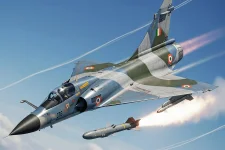
Historically a heavy weapon restricted to large platforms, the missile will now be integrated across a much wider array of fighter jets.
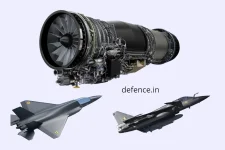
For instance, India's indigenous LCA Tejas will be capable of carrying two of these lethal missiles, significantly boosting its offensive reach.
Integration evaluations are already running in parallel with preparations for the upcoming maiden flight of the Tejas Mk2 prototype.
The heavyweight Su-30MKI fleet will also experience a massive upgrade in its strike package; while it currently carries a single air-launched BrahMos, it will soon be able to equip up to three BrahMos-NGs simultaneously—one under the fuselage and one on each wing.
Following the successful validation of the air-launched configuration, mass manufacturing is projected to commence between 2027 and 2028.
Serial production will be anchored at the dedicated BrahMos manufacturing centre located within the Uttar Pradesh Defence Industrial Corridor in Lucknow—a sprawling, state-of-the-art facility expected to produce up to 100 missiles annually once at full capacity.
The IAF is expected to formally induct the weapon system around 2029.
Looking beyond aerial supremacy, the development roadmap includes adapting the BrahMos-NG for naval underwater operations.
Engineers will eventually focus on creating a specialized torpedo-tube-launched variant for the Indian Navy's submarine fleet.
This compact, next-generation maritime strike weapon is earmarked for integration aboard the upcoming Project-75I (P-75I) conventional diesel-electric submarines with Air-Independent Propulsion (AIP), as well as India's advanced Project-77 nuclear-powered attack submarines (SSNs), ensuring the nation maintains a formidable and versatile deterrent capability across all domains.