- Views: 2K
- Replies: 8
The dynamics of air superiority in Asia are shifting significantly as China aggressively expands its fleet of fifth-generation fighter jets.
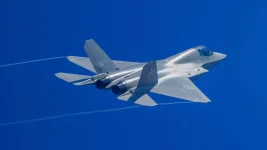
The People's Liberation Army Air Force (PLAAF) is ramping up the production of its Chengdu J-20 stealth fighters. If this momentum continues, experts suggest China could deploy between 500 and 1,000 of these advanced jets by 2030.
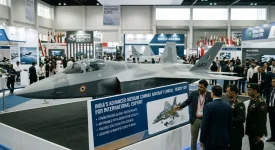
In contrast, the Indian Air Force (IAF) is currently relying on its robust fleet of fourth and 4.5-generation aircraft, as its own fifth-generation project, the Advanced Medium Combat Aircraft (AMCA), is still under development and not expected to enter active service until the mid-2030s.
This growing numerical gap has sparked discussions about India's timeline for adopting stealth technology and how it will secure its skies in the interim.
The Strategic Pivot: Leaving the FGFA Programme
A pivotal moment in India's aviation history occurred in 2018 when New Delhi decided to withdraw from the Fifth Generation Fighter Aircraft (FGFA) joint venture with Russia.Originally, this collaboration on the Sukhoi Su-57 was meant to fast-track India's access to stealth technology while giving its domestic defence industry valuable co-development experience.
However, the partnership faced numerous hurdles. India reportedly raised serious concerns regarding the lack of technology transfer, escalating costs, and unequal work-sharing arrangements.
Furthermore, there were reservations about the Su-57's actual stealth capabilities, the reliability of its engines, and overall maintenance issues.
Instead of pouring more resources into a fighter that fell short of its requirements, India chose to walk away and channel its efforts into creating its own stealth fighter, the AMCA.
While this decision firmly prioritised long-term strategic independence, it inherently meant accepting a delayed entry into the fifth-generation era.
The AMCA Pathway vs. China's Mass Production
India’s approach to building the AMCA has been meticulous and phased, contrasting sharply with China's state-directed, rapid manufacturing model.India's Cabinet Committee on Security (CCS) officially cleared the AMCA prototype development phase in March 2024 with a sanctioned budget of roughly ₹15,000 crore. The first prototype is projected to roll out by 2027, with its maiden flight slated for 2028.
Furthermore, high-level discussions are currently underway for a joint venture to develop a powerful indigenous engine to power future variants.
While this accelerated timeline is promising, serial production is targeted for 2035, meaning the IAF will navigate the next decade without a home-grown stealth jet.
China, meanwhile, holds a distinct industrial advantage. By heavily investing in the Chengdu Aircraft Corporation, Beijing has established multiple simultaneous assembly lines.
Estimates suggest China is producing over 100 J-20s annually, rapidly forming one of the most formidable stealth fleets globally.
India has opted for a more collaborative manufacturing model. The Ministry of Defence is preparing to issue a Request for Proposal (RFP) for the AMCA, inviting consortiums of both public and private sector giants—including Tata Advanced Systems, Larsen & Toubro, and Bharat Forge—to build the aircraft.
This strategy is designed to create a robust, self-reliant domestic aerospace ecosystem, even if it begins while China is already mass-producing.
Rethinking the "Stealth Gap"
Despite the disparity in raw numbers, the IAF maintains that modern air combat is not solely determined by how many stealth fighters a nation possesses.Indian military leadership emphasises that stealth is just one component of a much larger combat network that includes advanced sensors, electronic warfare, and precision weaponry.
This perspective was validated in 2018 when Indian Su-30MKI fighters successfully tracked J-20s flying over Tibet.
Aviation experts have pointed out that a stealth aircraft's radar invisibility can be compromised by various factors, such as carrying external fuel tanks, flying certain flight paths, or encountering specific radar angles.
While the J-20 undeniably possesses a low radar signature, stealth technology is designed to reduce the distance at which an aircraft is detected, rather than making it completely invisible.
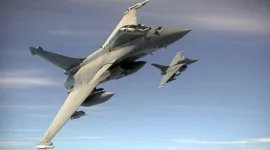
Furthermore, India has leveraged its Dassault Rafale fleet to maintain a qualitative edge. Armed with the deadly Meteor beyond-visual-range missile, state-of-the-art AESA radars, and the advanced SPECTRA electronic warfare system, the Rafale is highly capable of detecting and surviving advanced threats.
Former Air Chief Marshal B.S. Dhanoa has also noted that certain design elements of the J-20, such as its forward canards, might actually increase its radar cross-section, though the jet's exact capabilities remain a closely guarded secret.
A Multi-Layered Defence Strategy
To counter the J-20 fleet before the AMCA arrives, India has constructed a comprehensive, multi-layered defence network.In the air, the multirole Rafales provide potent offensive capabilities, while the Su-30MKI fleet is slated for major upgrades involving new domestic radars and indigenous weapons.
On the ground, India's airspace is shielded by the formidable S-400 Triumf long-range air defence system.
Additionally, the Defence Research and Development Organisation (DRDO) is rapidly advancing "Project Kusha"—an indigenous Extended Range Air Defence System (ERADS) designed to track and destroy stealth fighters, drones, and cruise missiles at ranges up to 400 kilometres.
Following a successful maiden test of its M1 interceptor in July 2026, Project Kusha is expected to be phased into service by the end of the decade, serving as a critical countermeasure against fifth-generation threats.
Ultimately, while China’s rapid J-20 production has given it a numerical edge, India's withdrawal from the FGFA to pursue the AMCA ensures true technological sovereignty for the future.
In the interim, India is proving that raw numbers do not define combat readiness. By integrating advanced 4.5-generation fighters with lethal long-range missiles, secure data networks, and an impenetrable, multi-tiered surface-to-air defence umbrella, India aims to maintain absolute security in its skies until its own stealth fighter takes flight.