- Views: 1K
- Replies: 1
According to reports from the French media outlet Meta-Defense, Indian defence scientists have achieved a significant breakthrough by decoding the complex technology behind the Chinese-made PL-15E air-to-air missile.
The Defence Research and Development Organisation (DRDO) and the Indian Air Force (IAF) successfully analysed the missile's radar signals, communication links, and frequency patterns.
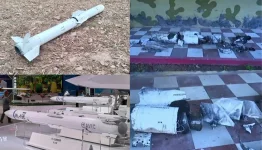
Open-source intelligence indicates that this was made possible after a nearly intact missile was recovered near Kamahi Devi in Punjab's Hoshiarpur district during Operation Sindoor in May 2025.
Because the export variant lacked a self-destruct mechanism, Indian experts were able to thoroughly examine the hardware, removing any guesswork about how the weapon detects and tracks targets.
The crucial data extracted from the PL-15E has been quickly added to India's military databases, allowing the armed forces to create effective strategies against it.
Consequently, the IAF has already updated the software on its key fighter jets with new jamming techniques specifically designed to counter this missile.
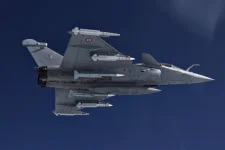
The advanced electronic warfare systems on India's indigenous Tejas Mk1A, the upgraded Su-30MKI, and the Rafale's highly capable SPECTRA suite have all been upgraded.
These fighters can now detect the PL-15E earlier, identify it accurately, and disrupt its path during long-range aerial combat.
This success was made possible by recovering physical remnants of the missile during recent border skirmishes.
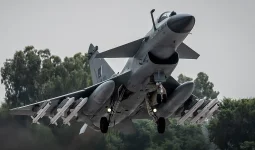
The weapon, fired by Pakistani jets such as the J-10C or JF-17, travelled an estimated 100 kilometres inside Indian territory, providing scientists with rare access to one of China's most sophisticated export arms.
In the past, the PL-15E's advanced features, including its active electronically scanned array (AESA) radar seeker, speeds exceeding Mach 5, and dual-pulse solid rocket motor, presented a considerable challenge.
However, direct examination has allowed India to develop strong countermeasures.
French publications note that these software upgrades significantly enhance the defensive shields of Indian aircraft, offering pilots a major advantage in any future conflicts.
Equipping Indian jets with specific profiles to counter the PL-15E represents a major step forward for the country's electronic warfare capabilities.
The protective systems on the Tejas, Su-30MKI, and Rafale are now programmed to quickly identify and neutralize this specific threat with high accuracy.
Beyond improving immediate aircraft defences, the insights gained from reverse-engineering the PL-15E's components are expected to be highly beneficial for India's domestic missile programs.
Experts suggest that the recovered technology, particularly the AESA seeker and data link systems, will accelerate the development of the indigenous Astra Mk-2 and Mk-3 missiles.
These advancements increase India's technological advantage over its regional rivals.
While Pakistan depends on imported Chinese systems—which have now been decoded and countered—India is showcasing its ability to quickly adapt and develop its own high-tech solutions.
The speed at which Indian scientists turned captured enemy hardware into defensive upgrades for its entire fighter fleet highlights the strength and maturity of the nation's defence industry.
It proves India's capability to transform a direct threat into a strategic asset that enhances national security.
With the IAF actively integrating these new defences into its daily training and readiness protocols, India further cements its status as a leading air power in the region.
The military is now better equipped to control the skies and defend against modern long-range missile threats.
This milestone is the latest in a series of strategic victories for the country, joining other recent successes like developments in nuclear submarines and advanced combat gear, and it clearly underlines India's rising prominence in the global defence sector.