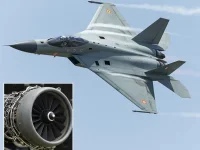
In a major leap for India’s aerospace sector, Mishra Dhatu Nigam Limited (MIDHANI) secured official clearance from the Centre for Military Airworthiness and Certification (CEMILAC) in early 2026 for its domestically manufactured aerospace superalloys.
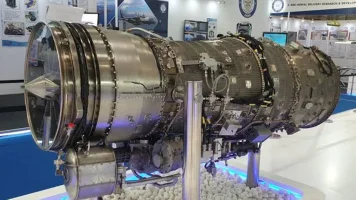
These critical materials are essential for producing the AL-31FP turbofan engines that power the Indian Air Force’s (IAF) fleet of Sukhoi Su-30MKI fighter jets.
This certification significantly bolsters the country's self-reliance, insulating the domestic defence supply chain from international disruptions and reducing dependence on imported metals.
Breaking the Dependency on Imported Metals
Historically, the specific alloy grades required for the engine—such as BZL1, BZL14H, and ZS 6Y—were treated as restricted, "black-box" items.Even though Hindustan Aeronautics Limited (HAL) has been manufacturing the AL-31FP engines under licence at its Sukhoi Engine Division in Koraput, Odisha, the crucial raw materials for the high-temperature sections still had to be sourced directly from Russia.
With MIDHANI's newly certified alloys, HAL can now source these foundational metals locally.
This metallurgical breakthrough directly supports the landmark ₹26,000 crore contract signed in September 2024, under which HAL is tasked with delivering 240 new AL-31FP engines to the IAF over an eight-year period, aiming for an indigenisation level of over 60%.
The Science Behind the Superalloys
The newly certified materials are engineered to survive the brutal environment inside a jet engine:- ZS 6Y: This nickel-based superalloy is explicitly designed for high-pressure turbine blades. Because these blades operate in environments exceeding 1,200 degrees Celsius, the material must possess extreme thermal stability and resistance to "creep" (gradual deformation under continuous stress).
- BZL1 and BZL14H: These casting superalloys are vital for producing stator vanes and intricate structural components within the engine's hot section. They are formulated to endure severe mechanical stress and rapid temperature fluctuations during combat flight operations.
Boosting Operational Lifespan and Thrust
The traditional AL-31FP engine features a total technical lifespan of roughly 3,000 hours, requiring a major overhaul every 1,000 hours.By utilising MIDHANI's upgraded materials, these operational limits could see substantial improvement.
- Higher Purity Processing: MIDHANI has upgraded its infrastructure with modern Vacuum Induction Melting (VIM) and Electroslag Remelting (ESR) technologies. These advanced techniques yield alloys with far fewer impurities than traditional Soviet-era manufacturing methods.
- Increased Durability: The superior fatigue strength of the indigenous BZL1 and BZL14H alloys is expected to minimise thermal cracking. Aviation analysts project that integrating these refined materials during routine overhauls could extend the mean time between overhauls by 15 to 20 percent.
- Consistent Power: The heat-resistant properties of the high-purity ZS 6Y alloy enable the turbine to safely maintain peak entry temperatures for longer periods. This ensures the engine can reliably sustain its maximum thrust output of approximately 12,500 kilograms-force without structural failure.
Economic Impact on the Defence Sector
In previous years, variations in the quality of imported metal batches sometimes led to engine defects, forcing premature withdrawals from service.By establishing a unified, domestic standard for these superalloys, the IAF can ensure greater reliability across its entire active fleet of over 260 Su-30MKI fighters.
Furthermore, this localisation effort is set to yield immense financial benefits. Defence industry estimates indicate that producing these aerospace alloys within India will slash material acquisition costs by 30 to 40 percent.
Over the operational life of the Su-30MKI fleet, this translates to annual savings amounting to hundreds of crores, reinforcing the long-term economic viability of India's indigenous defence manufacturing ecosystem.