- Views: 2K
- Replies: 11
Dassault Aviation is adopting a radically altered strategy for India’s forthcoming 114 Rafale Multi-Role Fighter Aircraft (MRFA) procurement, a mega-deal estimated at roughly ₹3.25 lakh crore.
In a marked departure from the unsuccessful 126-jet Medium Multi-Role Combat Aircraft (MMRCA) initiative from a decade ago, the French aerospace manufacturer has committed to assuming direct oversight of the jets.
Furthermore, the company is exercising total independence in selecting its local industrial partners and intends to execute all flight and ground validations on Indian soil.
The previous MMRCA project primarily collapsed due to a fundamental disagreement over accountability. Under that framework, Hindustan Aeronautics Limited (HAL) was mandated to build 108 Rafale fighters through a technology transfer agreement.
However, Dassault declined to guarantee the operational quality of the HAL-manufactured aircraft, expressing concerns over the Indian state-owned firm's capacity to handle the sophisticated production process.
The Indian Ministry of Defence insisted that Dassault take full liability for the entire fleet, a dispute that ultimately caused the deal's cancellation and paved the way for a limited purchase of 36 off-the-shelf Rafales in 2016.
To avoid repeating history, Dassault’s leadership has confirmed that the company will serve as the primary integrator for the new MRFA programme.
By retaining full responsibility for the aircraft, Dassault ensures stringent oversight of manufacturing standards, delivery timelines, and complex systems integration.
Defence analysts have long cited this accountability shift as a necessary structural fix to revive a large-scale Rafale production line in India.
In alignment with this new framework, Dassault is actively curating its own network of Indian suppliers based on technical merit and manufacturing competence, rather than relying on a default government-assigned partner.
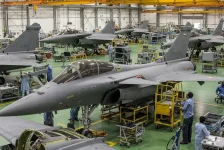
Tata Advanced Systems Limited (TASL) has already secured agreements to manufacture Rafale fuselages in Hyderabad—marking the first instance of these components being assembled outside of France.
The bidding process for additional structural elements, such as wing manufacturing, is expected to attract intense competition among both private and public sector aerospace entities, including HAL and Tata.
The scale of local production planned for the MRFA deal is substantial. Approximately 90 of the 114 fighters will be built domestically, while the remaining jets will be delivered directly from France in fly-away condition.
The initial indigenous manufacturing content is projected to be between 40 and 50 percent, with expectations for it to grow as local supply chains mature.
This decentralised manufacturing strategy, distributing work across multiple specialised domestic firms, closely mirrors the broader objectives of India’s Strategic Partnership model and aims to urgently address the Indian Air Force’s dwindling fighter squadron numbers, which currently sit at 29 against an authorised strength of 42.
Solidifying its commitment to domestic operations, Dassault plans to conduct all ground and flight testing for the locally produced Rafales within India, rather than relying on facilities in France.
This comprehensive quality-assurance strategy is designed to bypass the technical and bureaucratic hurdles that hindered past acquisitions.
Following clearance from the Defence Acquisition Council (DAC) earlier this year and the recent finalisation of the formal Letter of Request (LoR), Dassault aims to sign the final contract by the end of 2026, pending final approval from the Cabinet Committee on Security.