- Views: 2K
- Replies: 1
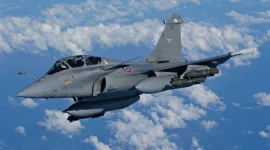
French aerospace leader Dassault Aviation has intensified its efforts to secure a landmark agreement with the Indian government for the procurement of 114 Rafale fighter aircraft by the conclusion of 2026.
This accelerated timeline was recently confirmed by Dassault CEO Éric Trappier, following the Indian Defence Acquisition Council's (DAC) formal approval of the project in February 2026.
The multi-billion dollar deal, estimated at approximately ₹3.25 trillion ($36 billion), is viewed as a critical step in addressing the Indian Air Force’s (IAF) urgent requirement for modern combat platforms.
Strategic Shift to Advanced F4+ and F5 Standards
Negotiations are currently focused on a sophisticated configuration known as the Rafale F4+ standard.This variant introduces significant technological advancements over earlier models, featuring enhanced radar capabilities, upgraded electronic warfare suites, and the integration of the Thales TALIOS targeting pod.
A notable addition to the current discussions is an option for India to acquire the F5 "Super Rafale" standard in subsequent batches.
Slated for service in the early 2030s, the F5 is designed for the modern "collaborative combat" era. It is expected to feature:
- M88 T-REX Engines: Upgraded powerplants providing 20% more thrust.
- Unmanned Integration: The ability to control "loyal wingman" drones, such as those derived from the nEUROn project.
- Stealth Detection: Advanced RBE2-XG radar utilizing Gallium Nitride (GaN) technology to track low-observable threats.
Boosting 'Make in India' and Local Assembly
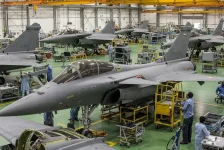
Central to the deal is a robust commitment to domestic production.Under the proposed framework, only 18 aircraft will be delivered in a "fly-away" condition from France. The remaining 96 jets are expected to be manufactured at the Dassault Reliance Aerospace Limited (DRAL) facility in Nagpur.
India has mandated a phased indigenisation strategy, targeting over 60% local content by the end of the contract. This initiative aims to transform India into a global hub for Rafale maintenance, repair, and overhaul (MRO).
Strategic partnerships, including those between Tata Advanced Systems and Dassault, are already laying the groundwork by producing fuselage sections in Hyderabad, with full-scale domestic assembly projected to begin by the late 2020s.
Addressing the Squadron Shortfall
The urgency behind this defence procurement is underscored by the IAF's declining squadron strength, which currently stands at 29—well below the sanctioned requirement of 42.5.With delays in the indigenous LCA Tejas Mk1A programme and the retirement of legacy MiG-21 fleets, the 114-jet Rafale order is seen as the most viable path to maintaining regional air superiority.