In what is shaping up to be the most extensive active combat aircraft procurement initiative globally, the Indian government has reportedly finalized the Request for Proposal (RFP) to acquire 114 Dassault Rafale jets.
This long-awaited project under the Multi-Role Fighter Aircraft (MRFA) programme is poised to significantly upgrade the nation's aerial combat strength in response to complex regional security dynamics.
According to sources within the defence and security establishment, the Indian Air Force (IAF) intends to formally issue this document just before consecutive high-level diplomatic missions to France.
Chief of the Air Staff, Air Chief Marshal A.P. Singh, is scheduled to visit the European nation shortly, followed by Prime Minister Narendra Modi next month. During these visits, an overarching government-to-government framework agreement is strongly anticipated to be announced.
The envisioned procurement model heavily prioritises indigenous manufacturing and extensive Transfer of Technology (ToT).
Under this framework, 22 of the multirole jets, including twin-seater trainer versions, will be delivered directly from France in a ready-to-fly condition.
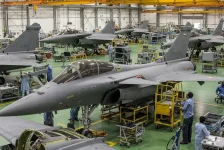
The vast majority, comprising 92 fighters, are slated to be built on Indian soil through a strategic partnership between the original equipment manufacturer, Dassault Aviation, and a domestic private-sector defence firm.
Executing this agreement would mark a monumental milestone in aerospace manufacturing. India would become the first nation outside of France to assemble the Rafale platform natively, establishing a historic decentralization of the aircraft's global production ecosystem.
Currently, the formal RFP is clearing its final administrative hurdles.
Once the French side receives the request and submits its comprehensive technical and commercial proposals, India's Ministry of Defence will form specialized committees to handle rigorous contract and price negotiations.
While the broad political agreement might be unveiled during Prime Minister Modi’s upcoming tour, the formal commercial signing is projected to take place later within the current fiscal year.
Beyond the immediate tactical advantages, the 114-jet deal is seen as a major catalyst for creating a robust national aerospace supply chain.
Departing from the traditional reliance on state-run enterprises like Hindustan Aeronautics Limited (HAL), this undertaking will empower private industry.
Experts project that it will drive extensive localisation in areas such as aerostructures, avionics, precision engineering, long-term maintenance, and weapons integration.
On an operational level, integrating 114 additional Rafales will provide the IAF with a formidable edge.
The 4.5-generation aircraft is equipped with cutting-edge Active Electronically Scanned Array (AESA) radars, robust electronic warfare systems, and heavy-hitting standoff weapons, including the SCALP cruise missile and the Meteor beyond-visual-range air-to-air missile (BVRAAM).
The IAF already successfully operates a fleet of 36 Rafale fighters—procured under a 2016 agreement—across two dedicated squadrons located at Ambala in Haryana and Hasimara in West Bengal.
Expanding upon this proven platform will simplify logistics, reduce training overhead, and ensure seamless interoperability with the Indian Navy, which is also advancing its own acquisition of 26 Rafale Marine (Rafale-M) fighters for its aircraft carriers.