India is currently undertaking a monumental shift in its military architecture with the planned establishment of the Integrated Rocket Force (IRF).
This new tri-service command is engineered to consolidate and manage conventional, long-range strike capabilities across the Army, Navy, and Air Force.
This strategic evolution is heavily informed by modern combat dynamics and the tactical successes observed during the May 2025 Operation Sindoor, where Indian forces executed highly coordinated precision strikes.
Past discussions often leaned toward placing a rocket force solely under the jurisdiction of the Army. However, the finalised vision champions a unified, tri-service approach.
Under this new framework, the IRF will operate under the leadership of a designated commander who reports directly to the Chief of Defence Staff (CDS).
This structure intentionally mirrors the administrative setup of the Strategic Forces Command (SFC), ensuring streamlined decision-making.
A primary motivation for establishing the IRF is to draw a distinct line between India’s conventional strike assets and its nuclear arsenal.
In the heat of conflict, eliminating any ambiguity regarding the nature of an attack is vital to preventing an unintended nuclear escalation.
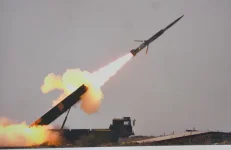
By housing conventional tactical weapons—such as the Pralay quasi-ballistic missile—exclusively within the IRF, India sends a clear message to adversaries that such launches are strictly non-nuclear.
The backbone of this new command will be a highly layered strike network, built to deliver precise kinetic effects across varying distances.
The IRF will field the Pralay missile for heavy, short-range bombardments spanning 150 to 500 kilometres.
The Pralay system has already demonstrated its reliability, notably during a successful DRDO salvo launch in December 2025.
With the Ministry of Defence clearing the acquisition of hundreds of these units for the Army and Air Force, the first Pralay regiment is projected to officially enter IRF service by 2026–2027.
For deeper engagements reaching between 450 and 1,000 kilometres, the IRF will rely on cruise and stealth platforms like the Nirbhay and the BrahMos Extended Range missiles.
The BrahMos system, in particular, proved its exceptional combat maturity and precision during the real-world operational conditions of Operation Sindoor, solidifying its place as a cornerstone of India's conventional deterrence.
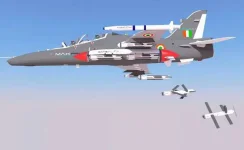
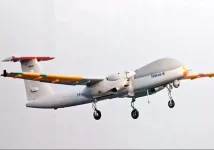
Beyond traditional missiles, the most agile component of the IRF will be its arsenal of "smart" assets.
Operating primarily in the 50 to 150-kilometre range, advanced drone swarms and loitering munitions will provide a persistent threat over the battlefield.
Domestic production and research are accelerating to supply the forces with high-endurance, and potentially ramjet-powered, loitering systems.
These smart munitions are designed to travel deep into hostile territory, circle contested zones, and autonomously hunt for high-value, mobile targets.
By seeking out enemy command vehicles, radar installations, and surviving air defence batteries, these systems act as a critical mop-up layer following the initial waves of missile strikes.
The design and doctrine of the IRF have been thoroughly shaped by the realities of recent global conflicts, spanning from the battlefields of Eastern Europe to the Middle East, as well as India's own border experiences.
These events have proven that modern drone systems and loitering munitions are now just as indispensable as heavy artillery.
While the IRF is built to counter the massive scale of China’s standalone People’s Liberation Army Rocket Force (PLARF), India is not seeking an identical replica.
Instead, New Delhi is forging an interconnected, joint-command structure tailored to deliver rapid, unmatched conventional strike superiority.