In a major step toward military self-reliance, Armenia is looking to manufacture India's Guided Pinaka rocket systems and 155mm artillery shells within its own borders.
This move highlights a significant evolution in the bilateral defence relationship between New Delhi and Yerevan, transitioning from direct weapons purchases to comprehensive industrial cooperation.
Talks are currently active regarding Indian defence manufacturers building production facilities directly in Armenia.
The primary goal is to create a robust, uninterrupted supply of ammunition to safeguard the nation against international delivery blockades or logistical hurdles during times of crisis.
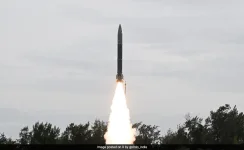
This strategic initiative builds upon a historic 2022 agreement where Armenia became the inaugural foreign buyer of the Pinaka Multi-Barrel Rocket Launcher (MBRL) system, a flagship platform designed by India's Defence Research and Development Organisation (DRDO).
That initial contract, valued at roughly ₹2,000 crore ($265 million), secured four batteries comprising Pinaka Mk-I and Mk-I Enhanced variants.
Following the successful delivery of the launcher units by late 2024, the Armenian military officially inducted the highly advanced Guided Pinaka rockets in early 2026, substantially boosting their frontline firepower.
The integration of the Guided Pinaka drastically alters the tactical application of Armenia's artillery corps.
Previously functioning primarily as a broad area-saturation weapon, the upgraded system operates as a highly lethal, precision-strike asset.
Equipped with advanced navigation and trajectory control kits, these rockets can accurately eliminate high-value enemy targets at distances of up to 75 kilometres.
Defence analysts frequently compare this modernized capability to the American HIMARS platform, which has clearly proven the battlefield necessity of long-range, guided rocket artillery in contemporary warfare.
Furthermore, the push for 155mm ammunition production directly supports Armenia's recent acquisitions of Indian-made howitzers, such as the Advanced Towed Artillery Gun System (ATAGS).
Yerevan's drive to domesticate weapons manufacturing is heavily influenced by its volatile regional security landscape, particularly in light of persistent tensions with neighbouring Azerbaijan.
By producing both rockets and standard 155mm shells locally, the Armenian armed forces can maintain peak combat readiness even during extended conflicts.
A domestic supply chain mitigates the perilous risk of wartime transport disruptions, guarantees rapid restocking of depleted arsenals, and opens the door for modifying the munitions to specifically suit the challenging, mountainous terrain of the Caucasus region.
From New Delhi's perspective, this potential joint venture is a monumental achievement for its rapidly expanding defence export sector.
It proves that indigenously developed hardware like the Pinaka is globally competitive, and that foreign allies trust Indian military technology enough to embed it into their fundamental security architecture.
Facilitating the setup of arms factories overseas aligns perfectly with the Indian government's broader strategic vision of projecting global influence through technology transfers and deep-rooted industrial alliances.