- Views: 1K
- Replies: 3
The worldwide push for hypersonic arms has dramatically changed how nations approach missile protection.
Traditional ballistic missiles travel on fixed, predictable arcs through space, but hypersonic glide vehicles (HGVs) pose a far more complex danger.
Flying faster than Mach 5, HGVs can aggressively change direction in mid-air, establishing themselves as some of the most challenging targets to shoot down.
Understanding this shifting threat landscape, the Defence Research and Development Organisation (DRDO) has initiated Phase III of India's Ballistic Missile Defence (BMD) initiative.
This represents a major leap forward in the nation's security strategy. Moving beyond standard ballistic missile defence, this new stage concentrates heavily on creating advanced technologies capable of neutralizing fast-moving, manoeuvrable hypersonic targets inside the Earth's atmosphere.
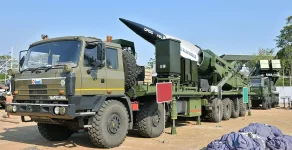
The cornerstone of this future-ready project is a fresh series of defensive weapons, spearheaded by the AD-AH (Anti-Hypersonic) interceptor. This cutting-edge interceptor will be backed by a network of supporting systems to neutralise the complex aerial dangers anticipated in the decades ahead.
Older ballistic missiles generally flew on well-known paths once their initial launch phase ended. This predictability gave long-range tracking radars the ability to compute their routes and accurately deploy interceptors.
Even though destroying these older missiles is a tough technical task, their flight paths can essentially be mapped out using basic physics.
In contrast, hypersonic weapons do not simply drop straight down onto their targets. After separating from their boosters, they glide through the upper atmosphere, pulling off sharp horizontal and vertical turns.
This capacity to steer mid-flight drastically shrinks the reaction time for defending forces and makes calculating an interception point incredibly difficult.
To address this, the forthcoming AD-AH interceptor is being designed very differently from previous weapons meant for standard ballistic targets.
It is projected to feature exceptional manoeuvrability, split-second reaction capabilities, and highly sophisticated guidance technologies that can instantly adjust to a target's erratic movements.
Ultimately, this new interceptor will not be chasing an object moving on a fixed curve. Instead, it must hunt down a weapon that is actively changing its course while flying at phenomenal velocities.
India’s current missile shield is already heavily dependent on powerful surveillance systems, notably the Swordfish Long Range Tracking Radar. This critical active phased array radar has been continuously enhanced since it was first deployed, ensuring it remains capable of tracking distant threats.
The upcoming Phase III will heavily expand upon these existing radar systems. The objective is to boost the military's capacity to swiftly spot, identify, and maintain a constant lock on highly agile weapons navigating through challenging atmospheric layers.
Keeping a steady lock on an HGV is far more complicated than tracking a standard ballistic missile. Because the hypersonic weapon can steer, defence systems cannot rely on traditional mathematical models to guess where the weapon will be a few seconds later.
The country’s Mission Control Centre (MCC) and its secure communication networks are built to instantly analyze radar data, assess dangers, and launch the correct interceptors.
Because hypersonic weapons shrink response times from several minutes down to less than a minute, Artificial Intelligence (AI) and automated systems will become vital for helping commanders make split-second defensive choices.
In the near future, military management systems will have to process feeds from numerous sensors at the same time. These systems must also constantly recalculate the interception trajectory as the incoming threat shifts its path.
In addition to the AD-AH, the DRDO is actively working on a second advanced interceptor named the AD-AM (Anti-Missile).
This weapon is specifically engineered to counter highly complex ballistic dangers, particularly those carrying Multiple Independently Targetable Re-entry Vehicles (MIRVs), such as Pakistan's Ababeel missile.
Missiles carrying MIRV payloads detach multiple, separately guided warheads as they near their targets. This tactic is designed to flood standard missile defence shields by forcing them to deal with numerous incoming threats all at once.
By creating dedicated families of interceptors, India ensures its security framework can tackle various types of strategic dangers. This tailored approach relies on specialised weapons for specific threat profiles, proving far more effective than depending on a single, one-size-fits-all interceptor.
Recently completed in mid-2026, Phase II of the BMD initiative introduced the highly capable AD-1 and AD-2 interceptor missiles.
These systems were constructed to take down long-range threats, including those matching the range of Intercontinental Ballistic Missiles (ICBMs), firmly placing India in an elite club of nations with advanced layered missile protection.
The successful trials of these weapons showcased major leaps in missile propulsion, target-seeking technology, navigation software, and high-speed interception capabilities.
The technical knowledge acquired during the successful Phase II trials now serves as the foundational blueprint for Phase III. These lessons are vital for solving the much more difficult engineering puzzle of shooting down hypersonic gliders.
Although the BMD program is dedicated to stopping strategic missiles, other initiatives like Project Kusha are being developed to offer long-range protection against aircraft, cruise missiles, and possibly some hypersonic threats.
When combined with existing assets like the S-400 and MR-SAM, along with upcoming homegrown systems, India is building a comprehensive, multi-layered shield rather than trusting a single defensive umbrella.
Today, potential hostile nations possess a diverse arsenal that includes ballistic missiles, cruise missiles, HGVs, suicide drones, and unmanned aerial vehicles. Each of these distinct weapons demands a unique strategy for tracking and neutralisation.
As a result, contemporary missile defence relies heavily on deeply connected sensor and weapon networks. These integrated systems must be smart enough to instantly pick the absolute best interceptor to defeat a specific incoming threat.
Moving forward, India’s financial and technological commitment to hypersonic defence goes far beyond just building new interceptor missiles.
Upcoming enhancements to the nation's defensive capabilities will likely feature stronger tracking radars, better electro-optical sensors, and battle management software driven by artificial intelligence.
Additionally, secure, lightning-fast communication networks and deeper coordination with military satellites will ensure the country remains fully protected against next-generation threats.