India is moving closer to a historic milestone in its domestic aerospace sector. Between January and March 2027, the government is expected to announce the winning private industry partner that will help build the first prototypes of the Advanced Medium Combat Aircraft (AMCA).
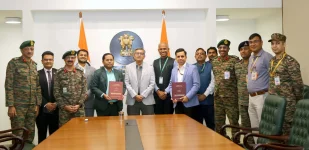
The Ministry of Defence recently issued a Request for Proposal (RFP) to three pre-selected groups competing for this landmark contract.
The final contenders are Tata Advanced Systems Limited (TASL), a partnership between Larsen & Toubro, Bharat Electronics Limited (BEL) and Dynamatic Technologies, and a third group combining Bharat Forge, BEML, and Data Patterns.
These teams are currently evaluating the technical requirements and preparing their final commercial and financial bids.
Competitors have been granted several months to submit thorough proposals. Their submissions must detail their manufacturing plans, project management strategies, supply chain networks, facility readiness, cost projections, and exact timelines to produce the initial test aircraft.
Once the proposals are received, the Ministry of Defence will review the financial bids to find the most cost-effective offer (L1) that still meets every strict technical standard. After this careful evaluation process, the government plans to declare the winner in the first quarter of 2027.
The chosen private partner will work alongside the Aeronautical Development Agency (ADA), the government body that serves as the design authority for the aircraft.
Supported by a massive ₹15,000 crore project budget approved by the Cabinet Committee on Security (CCS) in March 2024, this contract will cover the creation of five AMCA prototypes.
The winning team will set up manufacturing facilities—expected to be located at a new greenfield site in Andhra Pradesh—build the airframes, install advanced systems, and assist with the crucial flight testing phase.
This project signals a major shift in how India builds advanced military aircraft.
Instead of relying solely on traditional state-run companies, the defence ministry has invited private businesses to compete. The goal is to speed up production timelines and make full use of India's rapidly growing private aerospace industry.
Each of the three competing groups offers unique expertise. Tata Advanced Systems has deep experience in aviation manufacturing and international joint ventures.
The L&T-led group is known for precision engineering and defence electronics. Meanwhile, the Bharat Forge consortium brings strong capabilities in heavy manufacturing, mobility, and advanced radar and sensor systems.
The AMCA is envisioned as India’s first home-grown fifth-generation stealth fighter. It is being designed with special shaping and radar-absorbing materials to reduce its visibility to enemy radar.
The jet will feature internal weapon bays, smart artificial intelligence sensors, and the ability to fly at supersonic speeds without using extra fuel (supercruise).
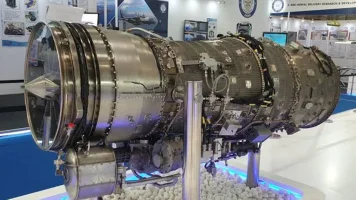
Early models will be powered by the American-made GE F414 engine, while future upgraded versions are planned to feature a more powerful, locally developed engine.
Selecting a manufacturing partner is the critical next step. Once awarded, the winning team can begin gathering materials, qualifying suppliers, and collaborating closely with designers to turn the blueprints into a physical aircraft.
If negotiations conclude quickly, the project will stay on track for the AMCA's highly anticipated first flight, which is targeted for late 2028 or 2029.