- Views: 3K
- Replies: 14
In September 2022, India's aerospace sector celebrated a major leap forward when the Cabinet Committee on Security (CCS) officially greenlit the Tejas Mk2 project.
Also known as the Medium Weight Fighter, this 4.5-generation jet received a substantial financial allocation of Rs 9,000 to 10,000 crore to cover its design, prototype manufacturing, and extensive flight testing phases.
The Indian Air Force (IAF) ultimately plans to induct over 200 of these advanced jets to replace its ageing squadrons.
When the project was sanctioned, official estimates suggested that the prototype would be publicly revealed and ready for its maiden flight within three years—aiming for late 2025 or early 2026.
However, as of March 2026, roughly three and a half years after the initial CCS clearance, the original timeline has been missed. The much-anticipated aircraft has yet to fly, and differing projections from the agencies involved have painted a complex picture of its true readiness.
Differing Timelines and Current Status
While recent reports indicate that the physical assembly of the aircraft is advancing well, the projected dates for its first flight remain a subject of debate among key stakeholders.The Defence Research and Development Organisation (DRDO) maintains a highly optimistic outlook.
DRDO leadership recently stated that the aircraft's maiden flight could occur as early as June or July 2026, noting that the design is mature and critical ground tests are already underway.
Unofficial reports even suggest that the first prototype has been internally rolled out and is currently undergoing rigorous pre-flight calibration.
On the other hand, Hindustan Aeronautics Limited (HAL) has provided a far more conservative estimate.
Factoring in the practical realities of aircraft manufacturing, supply chain logistics, and strict certification processes, HAL leadership recently indicated that the first flight is more likely to happen in the first quarter of 2027.
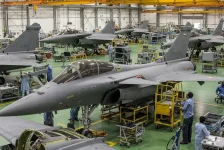
Currently, the prototype is estimated to be over 70% assembled. Engineers are actively preparing for ground functional checks, integration of the American-made GE F414-INS6 engine, and eventual taxi trials.
Before the jet can ever leave the runway, it must also secure clearance from the Centre for Military Airworthiness & Certification (CEMILAC).
What is Causing the Delays?
The slippage past the initial three-year deadline is the result of several overlapping technical and administrative challenges:- Design and Integration Hurdles: The Mk2 is significantly more complex than its predecessors. It features a larger airframe, canards for better agility, and a mandate to use over 80% indigenous components, all of which require meticulous engineering.
- Engine Supply Chain: The aircraft relies on the General Electric F414 engine. HAL recently reaffirmed its commitment to this engine, outright rejecting rumours of switching to French alternatives, as any redesign would cause catastrophic timeline setbacks. The historic deal with the U.S. includes an unprecedented 80% transfer of technology to build these engines in India, but finalising these complex international agreements took considerable time.
- Administrative Lags: Although the CCS approved the project in late 2022, the actual release of funds and the finalisation of international partnerships were reportedly delayed until late 2023, effectively shrinking the actual time available for development.
- Strict Testing Requirements: The programme demands the creation of four distinct prototypes and a grueling three-year testing phase to ensure the aircraft is combat-ready.
The Road Ahead
The Tejas Mk2 remains a cornerstone of India’s push for self-reliance in the defence sector, promising vastly superior range, payload, and modern combat capabilities compared to the current Tejas Mk1A.While the missed 2025 targets highlight the chronic challenges of military aviation research, the project is steadily moving forward.
Initial Operational Clearance (IOC) is tentatively targeted for 2028, with serial production expected to commence around 2029 and squadron deliveries starting in 2032.
Furthermore, to meet the IAF's massive requirement and bypass HAL's current production limits, the government is reportedly exploring options to involve private Indian aerospace companies in manufacturing the Mk2.
The exact date of the first flight will become much clearer once the ongoing ground trials are successfully concluded in the coming months.