Azerbaijan has expressed deep dissatisfaction regarding the strengthening defence cooperation between India and Armenia.
This growing partnership, highlighted by the delivery of advanced weaponry such as the Pinaka multi-barrel rocket launcher (MBRL) and the potential sale of BrahMos supersonic cruise missiles, has drawn sharp criticism from Baku.
Azerbaijani officials and state media have described New Delhi's move as a destabilising act of "warmongering" in the South Caucasus.
However, this outrage highlights a clear double standard, given Azerbaijan's long-standing and vocal support for Pakistan's stance on Kashmir—a matter of core national security for India.
The military relationship between New Delhi and Yerevan has expanded significantly following the 2020 and 2023 Nagorno-Karabakh conflicts.
Seeking to reduce its traditional reliance on Russian military hardware, Armenia has signed defence contracts with India estimated to be worth nearly $2 billion over the past few years.
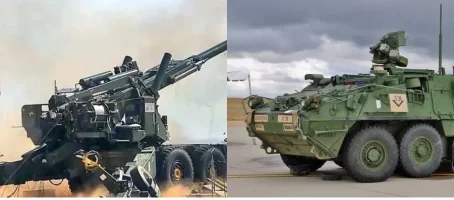
These comprehensive agreements cover a wide array of advanced platforms, including Swathi weapon-locating radars, Akash surface-to-air missile systems, Advanced Towed Artillery Gun Systems (ATAGS), and the highly regarded Pinaka MBRL.
The Pinaka system is particularly valued for its "shoot-and-scoot" mobility, offering precise and rapid rocket artillery strikes that enhance battlefield survivability.
Armenian armed forces have rapidly integrated these Indian-made weapons into their active ranks.
Showcasing their commitment to this new defence partnership, Armenia recently displayed these systems in military parades and gave them local cultural names, such as renaming the Pinaka to "Shant" (Lightning) and the Akash system to "Lusan" (Lynx).
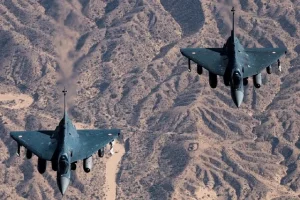
Furthermore, there is growing interest from Yerevan in acquiring the formidable BrahMos cruise missiles to establish long-range deterrence, especially as Azerbaijan continues to modernise its own air force with platforms like the JF-17 Thunder jets recently purchased from Pakistan.
From Azerbaijan's perspective, this military build-up is viewed as a direct provocation. Authorities in Baku argue that supplying weapons to Armenia disrupts peace negotiations in the region.
Over recent years, Azerbaijani officials, including members of parliament and presidential aides, have lodged formal protests with Indian diplomats, claiming these arms shipments threaten their national security.
This diplomatic pushback often spikes whenever Indian hardware is deployed or displayed in Armenia, prompting some voices in Baku to advocate for an even tighter military alliance between Azerbaijan, Pakistan, and Turkey to counter India's strategic footprint.
Yet, Azerbaijan's shock at India's actions appears inconsistent when evaluating its own diplomatic record.
Baku has been a steadfast supporter of Pakistan on the Kashmir issue across numerous international and bilateral platforms.
By endorsing Islamabad's narrative, hosting related diplomatic events, and standing by Pakistan during times of cross-border tension, Azerbaijan has actively inserted itself into India's security affairs.
In a reciprocal arrangement, Pakistan has firmly supported Azerbaijan's territorial claims in the Nagorno-Karabakh dispute.
This mutual alignment is reinforced by Turkey, which supplies both diplomatic cover and military technology to Baku and Islamabad.
While Azerbaijan seemingly expects India to remain entirely neutral in the South Caucasus, it actively participates in a geopolitical triangle that directly challenges Indian interests.
Global strategy, however, is interconnected. India's decision to arm Armenia is a calculated response to the realities of regional security, providing support to a friendly nation while simultaneously pushing back against an alliance of adversaries.
For New Delhi, exporting these weapon systems achieves two primary goals.
First, it fuels the commercial growth of India's domestic defence industry, which has seen record-breaking export numbers in recent years under the "Aatmanirbhar Bharat" initiative.
Second, it serves as a strategic counterweight. By acquiring Indian systems, Armenia gains cost-effective, battle-tested hardware.
The Pinaka provides the capability to swiftly neutralise armoured threats, while the potential addition of BrahMos would offer unmatched supersonic precision, forcing adversaries to reconsider their military strategies.
The frustration out of Baku illustrates a pattern of expecting unilateral advantages.
While Azerbaijan aggressively expands its own arsenal with advanced weapons from Turkey, Israel, and Pakistan for offensive operations, it simultaneously demands that Armenia remain undefended.
This hypocrisy is familiar to New Delhi, which frequently observes Pakistan's allies complaining about India's strategic partnerships while they themselves engage in alliances that threaten Indian sovereignty.
Ultimately, India's approach to the South Caucasus is rooted in practical diplomacy. By reinforcing its alliance with Armenia—a country that has consistently supported India on international stages—New Delhi is expanding its global defence footprint.
It also sends a clear message that India will actively respond to geopolitical blocs that undermine its interests. The deepening ties between Turkey, Pakistan, and Azerbaijan on sensitive matters like Kashmir naturally invite a strategic Indian response in their immediate neighbourhood.
As the security environment in the South Caucasus remains fragile and prone to sudden escalations, India's supply of military hardware is designed to create a balance of power and deter aggression, rather than incite conflict.
While diplomatic protests from Azerbaijan might dominate local headlines, they do not change the underlying reality: sovereign nations will always build alliances and secure defence partnerships that serve their strategic interests, regardless of selective outrage.