- Views: 2K
- Replies: 6
India is actively advancing a next-generation airborne weapon system poised to transform the landscape of aerial warfare.
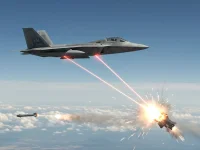
The Defence Research and Development Organisation (DRDO) is currently engineering a pod-based Directed Energy Weapon (DEW) for fighter jets.
This cutting-edge technology will offer pilots a robust active protection shield against hostile incoming missiles.
Similar to the United States' Self-Protect High Energy Laser Demonstrator, this indigenous project seeks to integrate laser-based defence mechanisms directly onto combat aircraft.
The Indian variant is being designed as a "hard-kill" active protection system. Rather than just deflecting a threat, it uses highly focused directed energy to physically degrade and destroy approaching projectiles.
Historically, military aircraft have depended on countermeasures like chaff and flares to survive. These traditional methods work by tricking or confusing the guidance computers of an attacking missile.
Yet, as modern anti-aircraft missiles adopt highly sophisticated multi-mode seekers, they are becoming increasingly adept at ignoring these older decoy tactics.
The upcoming airborne laser pod addresses this vulnerability by taking the fight directly to the weapon itself.
Rather than trying to distract a missile's seeker head, the high-energy laser beam is engineered to physically burn out or permanently blind the optical and electronic sensors of both Air-to-Air and Surface-to-Air missiles.
Striking at the speed of light, this ensures the threat is neutralized almost instantly.
In addition to missile defence, this directed energy pod will unlock vital non-kinetic offensive options.
It can precisely target unmanned aerial vehicles (UAVs) or drone swarms by crippling their onboard flight electronics and sensors, effectively bringing them down without the need to expend expensive conventional ammunition.
Furthermore, the laser can be focused on the optical sensors of rival fighter jets, temporarily or permanently blinding their situational awareness tools and granting Indian aviators a critical tactical edge in dogfights.
Complementing the laser initiative, DRDO's Centre for High Energy Systems and Sciences (CHESS) is also making strides in High-Power Microwave (HPM) technology as part of its broader DEW portfolio.
While lasers concentrate intense heat to cause physical damage, HPM weapons release massive bursts of microwave energy to overwhelm and permanently short-circuit electronic systems.
A single targeted HPM pulse could instantly "fry" the vital flight computers of enemy drones, aircraft, or missiles, rendering them completely useless in mid-air.
Reports indicate that the current iteration of these systems can effectively disable electronics at a range of one to five kilometres.
If the DRDO’s development timeline remains on track, initial airborne testing is projected to begin by June 2027. This schedule paves the way for the operational integration of these pods into the Indian fleet during the 2030s.
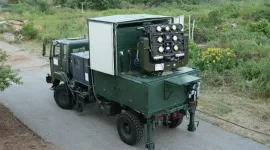
This airborne initiative closely follows DRDO's recent ground-based DEW milestones, such as the successful trial of the 30-kilowatt Mk-II(A) vehicle-mounted laser system at the National Open Air Range in Andhra Pradesh.
While the exact aircraft designated to carry these pods remain unconfirmed, it is highly likely that they will become a standard fixture on the frontline fighters of the Indian Air Force.
Prime candidates for this technological upgrade include the indigenous HAL Tejas Mk2, the newly upgraded Sukhoi Su-30MKI fleet, and India's upcoming fifth-generation stealth fighter, the Advanced Medium Combat Aircraft (AMCA).
Once fully realized, DRDO’s airborne laser pod will equip Indian fighter jets with an impenetrable, sci-fi-style energy shield.
By relying on pure, directed power powered by the aircraft's own engine rather than finite explosive munitions, this system will allow the air force to continuously destroy missiles, ground drones, and blind enemy sensors, marking a revolutionary leap in India's sovereign defence capabilities.