- Views: 2K
- Replies: 3
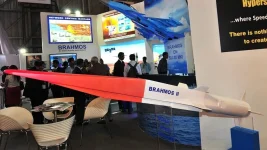
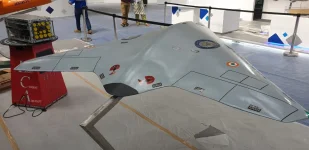
India’s Defence Research and Development Organisation (DRDO) has initiated preliminary work on a highly advanced, stealth-shaped cruise missile tailored specifically for the Advanced Medium Combat Aircraft (AMCA).
While the project is currently in its conceptual stage and will likely take around a decade to become fully operational, it represents a major step in India’s long-term strategy to establish a completely self-reliant supply chain for fifth-generation aerial weaponry.
This timeline aligns closely with the broader ₹15,000-crore AMCA programme, which aims to roll out its first prototype between late 2026 and 2027, before entering service in the mid-2030s.
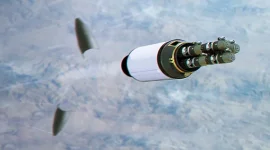
To achieve sustained high-speed flight, the proposed missile will rely on a compact ramjet propulsion system.
This engine will draw heavily from the technology currently powering the Astra Mk-3 beyond-visual-range air-to-air missile, which was recently renamed "Gandiva."
By utilising the Solid Fuel Ducted Ramjet (SFDR) technology—which DRDO successfully flight-tested off the coast of Odisha earlier in 2026—scientists hope to accelerate the development process and minimise the complex engineering hurdles associated with shrinking engine components.
The physical dimensions of this new cruise missile are strictly limited by the absolute necessity to fit inside the AMCA’s internal weapons bay (IWB).
For a fifth-generation fighter jet to remain invisible to enemy radar, it cannot carry weapons on its wings, as external payloads create massive radar reflections.
Open-source data indicates that the AMCA’s internal bay is designed to hold approximately 1.5 tonnes of armaments in full stealth mode.
Packing a powerful ramjet engine, air intakes, and guidance systems into this confined space is mandatory to preserve the jet's low radar cross-section during critical missions.
Once completed, the stealth cruise missile is projected to reliably strike targets at distances between 400 and 600 kilometres.
While traditional cruise missiles use subsonic turbojet engines that favour fuel efficiency and long flight times, this new ramjet-powered weapon will travel at sustained supersonic speeds.
This dramatically reduces the time adversaries have to react, improving the weapon's chances of defeating modern air defence networks.
This capability perfectly matches the operational philosophy of stealth combat: penetrating deep into hostile airspace to destroy critical assets like radar stations, mobile missile launchers, naval ships, and command centres from a safe standoff distance.
Building such a sophisticated weapon, however, comes with extreme technical hurdles.
Fitting a combustion system, guidance sensors, and supersonic air intakes into a highly restricted frame demands world-class aerodynamic engineering.
Furthermore, managing the intense heat generated by continuous supersonic flight is arguably the toughest obstacle.
If the missile gets too hot, it will emit a massive infrared signature that completely compromises its stealth profile.
Engineers must also perfect the complex ejection mechanisms required to safely drop a high-speed weapon from a moving aircraft's belly without destabilising the jet immediately after launch.
Ultimately, the creation of this internally housed stealth cruise missile marks a significant shift for India’s defence manufacturing sector.
Instead of relying on imported munitions to arm its future jets, DRDO is actively building a complete, home-grown arsenal.
Alongside domestically produced anti-radiation missiles and precision-guided smart bombs, this stealth cruise missile is set to become the backbone of the AMCA's future strike package.