- Views: 2K
- Replies: 4
India’s Defence Research and Development Organisation (DRDO) has taken a significant step toward self-reliance in military technology by initiating a new propulsion project.
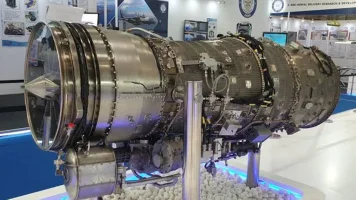
The Hyderabad-based Research Centre Imarat (RCI), a leading laboratory of the DRDO, is seeking private industry partners to build compact, flight-ready turbojet engines that can generate 1 to 2 kilonewtons (kN) of thrust.
This initiative is designed to power the nation’s future unmanned aerial combat systems and tactical missiles.
Released under the reference code RCI/TURBOJET/EOI/001, this Expression of Interest (EOI) calls upon domestic aerospace and defence companies to take charge of the complete engine lifecycle.
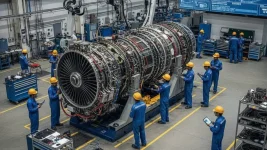
Chosen firms will be tasked with designing, manufacturing, testing, and delivering these compact propulsion systems, which are essential for upcoming air-breathing weapons.
This effort highlights India’s ongoing mission to reduce its reliance on foreign military imports. By mastering the production of these highly specialised engines natively, the country aims to bypass international technology restrictions and safeguard its defence supply chain.
To speed up the development, the Ministry of Defence is handling the selection process through its official eProcurement platform. The rapid schedule underscores the critical priority of this military programme.
The tender process officially began on May 19, 2026. Companies interested in the project will gather for a pre-bid meeting on May 29, 2026, at RCI Hyderabad, to discuss technical specifications, operational expectations, and qualification standards.
Final bids must be submitted by June 11, 2026, with the technical evaluation starting the next day. The bids remain valid for 180 days, pointing to a swift selection phase where the DRDO hopes to quickly identify capable industrial allies.
The 1–2 kN engine class is crucial for modern combat. While the DRDO already produces the larger Manik engine for heavy cruise missiles like the Indigenous Technology Cruise Missile (ITCM), this new category focuses on small, affordable, and easily deployable weapons.
Open-source data reveals that these engines must be incredibly compact—weighing under 25 kg with a diameter of less than 275 mm—while enduring extreme gravitational forces (up to ±10G) during sharp aerial manoeuvres.
They allow miniature weapons to travel at high subsonic speeds (up to Mach 0.9) over long distances without needing a massive frame.
Furthermore, the engines must operate reliably in extreme environments, ranging from freezing high-altitude conditions near the Line of Actual Control to scorching desert temperatures.
The chosen manufacturer will build more than just the engine core. They must deliver a fully integrated propulsion package, including the Full Authority Digital Engine Control (FADEC), fuel management, alternators, and electrical systems required for combat deployment.
The vendor will also oversee rigorous ground testing to ensure the engine performs flawlessly under simulated real-world conditions, particularly at high altitudes and rapid speeds.
Successfully creating this engine will fuel several major defence projects currently in the pipeline across various military branches.
A key use will be in advanced loitering munitions, commonly known as kamikaze drones. Turbojet power will give these drones the explosive "dash" speed needed to break through close-range enemy air defences and strike sudden, time-sensitive targets—a major upgrade over slower, battery-powered alternatives.
Additionally, these engines are perfectly sized for future Air-Launched Cruise Missiles (ALCMs), miniature cruise missiles, and extended-range stand-off weapons.
Once integrated into the Indian Air Force’s fighter fleet—including the Tejas Mk1A, Tejas MkII, Rafale, and Su-30MKI—these systems will provide a massive tactical advantage.
With these weapons, Indian pilots will be able to launch precision strikes against heavily fortified targets from 150 to 250 kilometres away, keeping the aircraft safely out of reach from enemy anti-aircraft fire.
Finally, the turbojets will power realistic aerial targets and decoys. Expendable platforms like the DRDO’s Abhyas high-speed target drone rely on this exact class of propulsion to mimic enemy cruise missiles, providing essential live-fire training for India’s surface-to-air missile crews.