In a major development for India’s conventional deterrence capabilities, the Defence Research and Development Organisation (DRDO) has been accorded the Acceptance of Necessity (AoN) for the development of a new Short-Range Ballistic Missile (SRBM), designated as the BM-04.
This regulatory clearance marks a pivotal transition for the programme, moving it from the conceptual design phase into full-scale hardware realisation and developmental trials.
Bridging the Tactical Gap
The BM-04 is envisaged as a high-precision, conventionally armed weapon system designed to bridge the operational gap between tactical battlefield rockets (such as the Pinaka) and strategic nuclear-capable missiles (like the Agni series).With an effective engagement envelope estimated between 400 km and 1,500 km, the missile is positioned to target high-value enemy infrastructure—such as command centres, airbases, and logistics hubs—deep within adversary territory without crossing the nuclear threshold.
This capability is particularly significant for India’s proposed Integrated Rocket Force (IRF), providing decision-makers with scalable options to neutralise anti-access/area denial (A2/AD) threats using conventional payloads.
Advanced Design and Aerodynamics
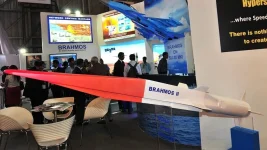
Unlike traditional ballistic missiles that follow a predictable parabolic trajectory, the BM-04 concept features a distinctive fixed-wing configuration. This aerodynamic design suggests the missile incorporates a manoeuvrable re-entry vehicle (MaRV) or hypersonic glide characteristics, allowing it to perform evasive manoeuvres during its terminal phase.The missile utilises a two-stage solid propulsion system, ensuring high reliability and a reduced launch preparation time. Technically, the system is reported to feature:
- Launch Mass: Approximately 11,500 kg
- Dimensions: A length of 10.2 metres and a diameter of 1.2 metres
- Guidance: A hybrid navigation suite combining inertial systems with satellite updates (GPS/NavIC), achieving a Circular Error Probable (CEP) of less than 30 metres.
Operational Flexibility
Survivability and rapid deployment are central to the BM-04’s operational doctrine.The missile is designed for canisterised launch from a road-mobile 6x6 Transporter Erector Launcher (TEL). This mobility allows the system to be quickly dispersed and fired from unprepared locations, significantly reducing its vulnerability to pre-emptive enemy strikes.
The visible control fins and base shroud on the showcased concepts indicate a focus on aerodynamic stability and terminal accuracy.
By delivering a 500 kg conventional warhead with pinpoint precision, the BM-04 offers a credible counter-force capability, ensuring that critical targets can be engaged effectively while minimising collateral damage.
A Shift in Strategic Posture
The granting of the AoN provides the necessary institutional and financial backing to accelerate the testing phase.Defence experts view the BM-04 as a critical component of India’s evolving warfighting toolkit, reflecting a broader shift towards precision-guided, conventional ballistic missiles that can deter aggression through the threat of accurate, non-nuclear retaliation.