- Views: 64
- Replies: 1
Indian Air Force (IAF) Chief Air Chief Marshal A.P. Singh has strongly affirmed that traditional manned fighter jets will continue to play a vital role in modern combat, despite the rising prominence of autonomous systems.
Addressing the India Defence Conclave hosted by BharatShakti in New Delhi, he rejected the idea that future aerial warfare will be entirely unmanned.
He stressed that human presence—often referred to as having a "man in the loop"—remains essential for making complex decisions and executing critical strikes.
Responding to predictions by tech billionaire Elon Musk that drones will entirely replace piloted jets, Air Chief Marshal Singh stated clearly that manned aircraft are here to stay for the foreseeable future.
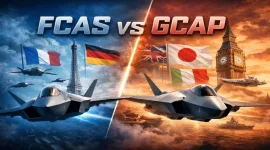
He pointed out that major military powers globally are developing sixth-generation fighter jets built around the concept of manned-unmanned teaming (MUM-T). In this setup, a human pilot commands a network of drones, ensuring human judgement remains central.
This approach highlights India's practical strategy for its air capabilities, blending advanced algorithms with the expertise of human pilots, especially as the nation continues its procurement of advanced fighters like the Rafale.
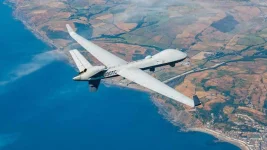
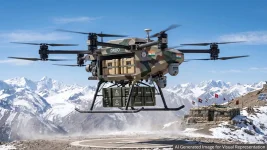
While acknowledging the capabilities of unmanned systems, the IAF Chief clarified that drones are supporting tools rather than independent war-winning weapons. He noted that while drones have introduced new dynamics to the battlefield, their limitations are evident.
According to Singh, unmanned aerial vehicles can assist operations, generate tactical confusion, and overwhelm enemy systems with large amounts of data through swarm technology, but they cannot secure victory on their own.
Highlighting a major limitation of current unmanned platforms, he explained that conducting deep, devastating strikes inside enemy territory still requires aircraft capable of carrying heavy payloads and delivering a massive impact—something drones cannot currently achieve.
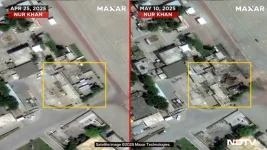
This reflects the tactical realities witnessed during Operation Sindoor in May 2025. During those cross-border precision strikes, elite pilots flying Rafale fighters successfully dismantled Pakistani air defence systems in less than 90 minutes.
While drones provided essential intelligence, surveillance, and reconnaissance (ISR), it was the real-time judgement of human pilots that ensured the mission's success without sparking a broader escalation.
The Air Chief's comments also serve as a counter to the growing narrative driven by figures like Musk, whom Singh had previously dismissed as a businessman lacking practical military expertise.
Instead of relying solely on autonomous tech, Singh champions a hybrid combat model. This aligns with international programmes such as the United States' Next Generation Air Dominance (NGAD) initiative, which pairs stealth fighters with autonomous "loyal wingman" drones.
For India, this strategy increases the importance of fast-tracking the Advanced Medium Combat Aircraft (AMCA) project. The AMCA Mk2, a 5.5-generation fighter expected to make its maiden flight around 2028, is being designed specifically to operate alongside AI-controlled drone escorts.
Reflecting on broader military strategy, Singh used Operation Sindoor as a prime example of achieving military objectives while maintaining restraint.
He pointed out that India successfully disrupted adversary logistics on the first day without territorial incursions, and wisely chose to de-escalate as soon as the opponent sought to end the conflict.
He observed that many modern conflicts drag on needlessly because leaders lose sight of their original goals, often driven by ego rather than strategic purpose. He stressed that knowing when to successfully terminate a conflict is an imperative skill.
This pragmatic approach also applies to the military's choice of weaponry.
Rejecting the idea that a single type of weapon can solve every tactical problem, Singh compared military assets to medicine, noting that a single paracetamol pill does not cure all ailments.
While long-range weapons like the BrahMos missile are excellent for keeping friendly forces safe and maintaining unpredictability, close-air support missions require the pinpoint accuracy and adaptability that only human-piloted jets can provide in fluid battlefield conditions.
Addressing India's push for self-reliance in defence manufacturing, the IAF Chief was optimistic but stressed the need for urgency.
He stated that while the domestic defence industry is not "groping in the dark," it needs to accelerate its progress.
He called for faster implementation of policies that support private sector companies and startups, which are vital for developing indigenous technologies and reducing reliance on foreign hardware.