- Views: 2K
- Replies: 2
As aerial warfare rapidly shifts towards stealth and autonomy, India's Defence Research and Development Organisation (DRDO) is preparing a strategic response: the Ghatak Unmanned Combat Aerial Vehicle (UCAV).
With neighbouring China expanding its fleet of 5th-generation J-20 fighters and investing heavily in next-generation drone technologies, the Indian Air Force (IAF) requires a decisive, asymmetric advantage.
The Ghatak—meaning "deadly" in Hindi—promises to deliver exactly that. By merging exceptional stealth, impressive endurance, and the ability to strike deep within hostile territory without risking a human pilot, this indigenous drone is poised to become a cornerstone of India's future aerial deterrence.
The Power of the Flying-Wing Design
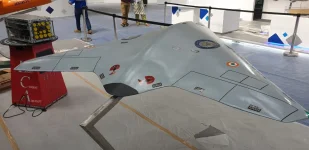
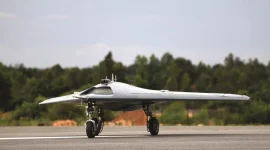
The core of the Ghatak’s survivability lies in its flying-wing architecture.Lacking a conventional tail and featuring smooth, blended contours alongside hidden engine intakes, the aircraft boasts a remarkably low radar cross-section. This shape makes it incredibly difficult for enemy air defence systems to detect.
Its aerodynamic viability was successfully proven in 2022 with the flight of the SWiFT (Stealth Wing Flying Testbed) technology demonstrator.
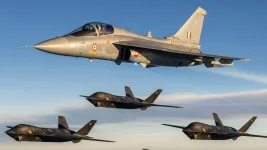
Operating as an invisible force multiplier, the Ghatak is designed for "Manned-Unmanned Teaming" (MUM-T).
This means it can fly seamlessly alongside manned fighters like the Su-30MKI, the upcoming Tejas Mk2, and the Advanced Medium Combat Aircraft (AMCA), penetrating heavily guarded airspace to destroy critical radar installations and command centres.
Exceptional Range and Indigenous Propulsion
While the Ghatak shares a similar physical footprint with the HAL Tejas light combat aircraft, its operational capabilities are distinctly superior for long-range missions.Weighing roughly 13 tonnes at maximum takeoff, its highly efficient shape allows it to carry approximately 3.7 tonnes of internal fuel.
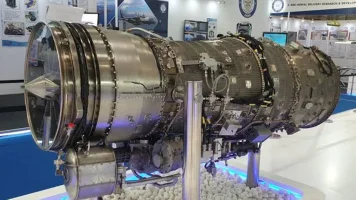
Open-source tracking confirms the platform will be powered by a specialised "dry" variant of India's indigenous Kaveri jet engine, producing around 52 kN of thrust. This engine is currently undergoing advanced certification trials in Russia.
Combined, these engineering choices grant the drone an impressive combat radius of over 1,000 kilometres and a loitering endurance of up to eight hours, allowing it to patiently hunt targets far beyond the reach of standard fighters.
Lethal Payload and the 'Gandiva' Advantage
To maintain its stealth profile, the Ghatak houses up to 1.5 tonnes of munitions entirely within an internal weapons bay.While it can carry precision-guided bombs for ground strikes, its true air-superiority edge comes from its planned integration with the Astra Mk3 air-to-air missile, also known as 'Gandiva'.
Public defence updates reveal that this cutting-edge missile utilises a Solid Fuel Ducted Ramjet (SFDR) propulsion system.
Capable of speeds reaching Mach 4.5 and a striking range of up to 350 kilometres, the Astra Mk3 will allow the Ghatak to safely eliminate high-value enemy assets—such as Airborne Warning and Control Systems (AWACS) and mid-air refuellers—long before it enters their visual range.
Silent Sensors and Artificial Intelligence
Surviving in heavily contested skies requires more than just a stealthy shape; it demands passive awareness.Rather than relying on traditional, easily detectable radar emissions, the Ghatak will utilise a sophisticated Distributed Aperture System (DAS).
Similar to the technology found on modern 5th-generation fighters, DAS uses a network of electro-optical sensors to provide a complete, 360-degree spherical view of the battlefield.
Empowered by advanced Artificial Intelligence (AI), the drone will be capable of autonomous threat identification, complex decision-making, and collision avoidance. This allows it to silently creep up on enemy stealth fighters and launch surprise attacks without ever revealing its position.
Securing the Skies of the Future
As China accelerates its deployment of advanced manned and unmanned combat systems, the Ghatak offers India a cost-effective and highly lethal countermeasure.By operating as an advanced scout and striking force, it keeps valuable human pilots safely out of harm's way.
The full-scale prototype is currently on track for a major rollout milestone around 2026—a timeline that closely mirrors the highly anticipated Tejas Mk2.
With potential induction into the IAF slated for the early 2030s, the Ghatak stands as a testament to India's push for self-reliance in defence, effectively rebalancing the scales of power in the region.