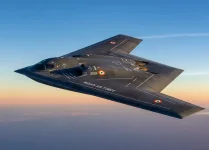
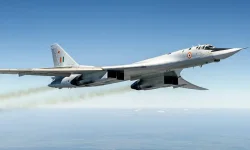
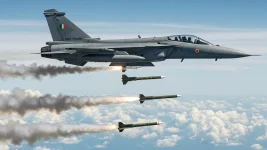
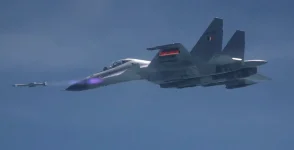
The Indian Air Force (IAF) is undergoing a quiet but significant transformation in its approach to modern aerial combat.
In recent years, the service has systematically expanded its inventory of air-launched stand-off weapons.
These specialized munitions allow pilots to engage high-value targets from great distances, ensuring they remain outside the reach of sophisticated enemy defence networks.
This strategic shift, which began with the adoption of the BrahMos supersonic cruise missile and the French SCALP system, has now evolved into a highly versatile and multi-layered strike architecture.
Strategic Integration and Global Lessons
This modernization effort is far more than a simple equipment upgrade; it represents a fundamental change in how the IAF intends to utilize its primary fighter fleet, including the Su-30MKI and the Rafale.The effectiveness of this approach was recently highlighted by the successful operational use of the Israeli Rampage missile.
Such weapons have demonstrated that stand-off capabilities can fundamentally alter the battlefield by enabling precise destruction of targets while significantly reducing the risk to aircraft and aircrew.
Building on these successes, the IAF is exploring even more advanced technologies.
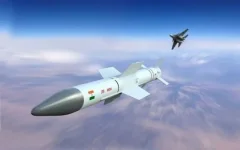
Recent reports indicate the potential inclusion of Air LORA, an Israeli air-launched ballistic missile (ALBM) known for its long range and unpredictable flight path that complicates enemy interception.
Additionally, there is significant interest in the Golden Horizon, a highly classified Israeli ALBM reportedly offered exclusively to India.
Capable of being launched from high-flying Su-30MKI platforms, this weapon could potentially extend India's precision-strike reach to approximately 800 km, filling a critical gap in hypersonic deep-strike capabilities.
Strengthening Indigenous Prowess
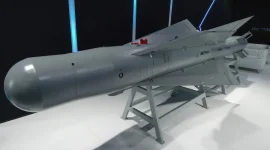
Complementing these international acquisitions are India’s domestic achievements led by the DRDO. The Rudram series of missiles is central to this indigenous push:- Rudram-II: Designed as a supersonic anti-radiation and ground-attack missile to neutralise enemy sensors and command centres.
- Rudram-III: A hypersonic variant intended to offer even greater speed and evasion capabilities.
Countering the Two-Front Challenge
The most critical driver of this buildup is India’s unique security environment, which requires constant readiness for a potential two-front conflict.In a scenario where resources must be divided between western and northern borders, stand-off weapons act as a vital force multiplier.
By utilizing these long-range systems, the IAF can degrade an adversary’s military infrastructure—such as radar sites, airfields, and command hubs—without the need for large-scale incursions into contested airspace.
This strategy allows the Air Force to "freeze" or contain a secondary front through deterrence and sharp, distant strikes, thereby freeing up its primary fighter squadrons to focus on achieving air superiority where it is most needed.
Ultimately, this evolution provides the IAF with the flexibility required for 21st-century warfare.
In an era where traditional "close-in" dogfights are increasingly hazardous, the ability to strike first and from a position of safety ensures that India maintains a credible and unforgiving deterrent against any regional aggression.