- Views: 2K
- Replies: 2
The Indian Air Force (IAF) has formally ended the operational era of the legendary Mikoyan-Gurevich MiG-21, a supersonic fighter that first joined the fleet in 1963 and served as the cornerstone of India's aerial strength for over six decades.
Following a final decommissioning event at Chandigarh Air Force Station on September 26, 2025, the last active units—No. 3 Squadron ("Cobras") and No. 23 Squadron ("Panthers")—have been officially number-plated.
With this historic transition from frontline duty to a managed inventory status, the military has initiated a meticulously planned post-retirement phase involving logistics, secure disposal, and material recovery.
The remaining MiG-21 Bison jets have been transported to designated centralized storage facilities, notably the Nal Air Base in Bikaner, as well as specialized Repair and Salvage Units.
At these locations, the airframes are no longer maintained for flight. Instead, military planners are evaluating each jet to determine its most appropriate end-of-life purpose, which ranges from historical preservation and weapons testing to complete material dismantling.
Before any major dismantling begins, the IAF conducts a strict de-militarization process. Technicians carefully remove sensitive military hardware and reusable subsystems from the aircraft.
Critical components, such as the Kopyo radar systems, electronic warfare equipment, and interfaces for beyond-visual-range missiles, are securely extracted.
These harvested parts are then preserved as strategic spares, allocated for technical training, or utilized to maintain other older aircraft models still in service, ensuring that valuable technology is not wasted.
Airframes deemed structurally unsound or too expensive to restore are directed toward government auction platforms, such as MSTC, for commercial disposal.
These jets are methodically disassembled to recover high-value industrial metals, particularly titanium and aluminum.
This controlled recycling process allows the premium materials from these veteran aircraft to re-enter the industrial supply chain, providing significant economic value in their final stage of existence.
Simultaneously, there is an immense demand to preserve the MiG-21 as a historical monument.
Educational institutions, government departments, and private entities frequently request these jets to serve as "Gate Guardians" or museum displays to inspire future generations.
Because of the aircraft's iconic status, applicants currently face a five- to six-year waiting list.
Acquiring a display jet typically costs between ₹30 lakh and ₹40 lakh, which covers transportation and initial preservation work, after which the receiving organization assumes full responsibility for its long-term upkeep.
The retired fighters are sorted into several distinct categories to maximize their remaining utility.
Jets chosen for static public display have their engines and classified systems replaced with safe replicas to ensure public safety.
Other airframes are kept marginally intact to serve as live-fire targets, helping the military validate new weapons and train in realistic combat scenarios within the modern kill chain.
A select few may be immaculately restored for ceremonial use or as diplomatic gifts to allied nations, while the rest are completely scrapped.
The systematic dismantling and repurposing of the MiG-21 highlights a highly organized approach to military lifecycle management.
Even after flying its final sortie, the aircraft continues to benefit the nation through resource recovery, tactical training, and historical inspiration.
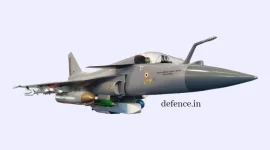
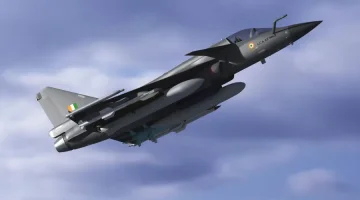
As indigenously developed platforms like the LCA Tejas step in to fill the void, the retirement of the MiG-21 marks a historic transition for India's air defence, proving that legacy military assets can be responsibly and efficiently managed long after their combat days are over.