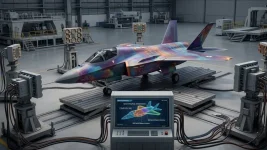
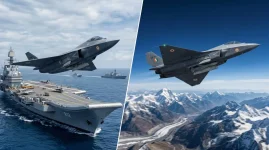
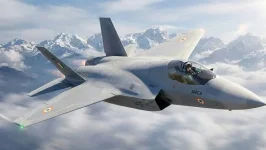
According to sources, India and France—already engaged in formal talks over co-developing a sixth-generation fighter aircraft—may see the programme expand to include two additional countries as full partners.
A French source indicates the two prospective partners may contribute comparatively little in terms of research and development, but could bring significant funding into the programme.
They would participate primarily through cost-sharing of what is estimated to be a roughly $100 billion overall development effort. These details remain unconfirmed and should be treated as preliminary, as no formal announcements regarding additional partners have been made.
Filling the Void Left by Germany
The talks build on a rapidly evolving situation surrounding France's Future Combat Air System (FCAS) programme.Originally conceived in 2017 as a joint Franco-German-Spanish sixth-generation fighter effort, disagreements between Dassault Aviation and Airbus over design leadership stalled the programme for years.
This culminated in France and Germany formally ending their joint fighter development work in June 2026, leaving France to continue the effort while Germany pursues a separate path.
This collapse created the opening that India has since moved to fill. India's Ministry of Defence confirmed in an August 7, 2026, report to the Parliament’s Standing Committee on Defence that it has initiated "concerted efforts" to co-join the French-led FCAS programme.
This follows earlier high-level talks between Defence Minister Rajnath Singh and his French counterpart Catherine Vautrin in February 2026.
Manufacturing and Design Roles
Under the structure sources describe, France would continue to lead the programme, drawing on its existing design authority and institutional experience from the FCAS effort.Meanwhile, India would serve as a manufacturing base for the aircraft.
This role would build naturally on the deepening aerospace manufacturing relationship already developing between the two countries, highlighted by Tata Advanced Systems’ work on Rafale fuselage sections and the broader Multi-Role Fighter Aircraft deal, which includes manufacturing 94 Rafale jets in India with substantial local industry participation.
The two additional prospective partners would also hold a share of component manufacturing work, expanding the industrial base of the programme beyond France and India alone, though the precise scope of that role remains undefined.
Prospective Partners and Funding Structure
While uncertainty remains regarding the identity of the two additional countries, sources point toward one possibility being a Middle Eastern country with friendly relations to both India and France, and another being a Southeast Asian nation with a large Muslim population.Given the sensitivity and speculative nature of these details, it would be prudent to avoid naming specific countries until their identities are independently confirmed, as prematurely naming a state carries real diplomatic and reputational risks.
If accurate, the entry of new nations contributing primarily capital rather than R&D capability would mark a notable departure from traditional multinational fighter programmes, where partners typically gain workshare and technology access proportional to their R&D contributions.
A cost-sharing arrangement weighted heavily toward funding could reflect France’s need to offset the loss of Germany’s substantial financial contribution to FCAS, while preserving French design leadership and Indian manufacturing centrality.
Synergy with India's AMCA Programme
For India, deepening involvement in FCAS would run in parallel with, rather than replace, its indigenous Advanced Medium Combat Aircraft (AMCA) fifth-generation fighter programme.The Ministry of Defence frames FCAS participation as a route to sixth-generation capabilities—including combat-cloud networking and collaborative unmanned systems—that build upon AMCA’s foundational stealth fighter competencies.
How the two programmes ultimately relate to each other, and whether the $100 billion cost estimate and expanded partner structure survive the early stages of talks, will likely become clearer as India’s formal engagement progresses.