- Views: 3K
- Replies: 4
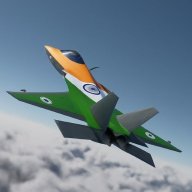
The development of India’s Advanced Medium Combat Aircraft (AMCA) has reached a critical stage, with American aerospace giant GE proposing a revised approach for the fighter’s propulsion system.
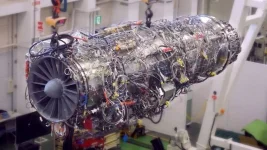
According to recent reports, GE has pitched a heavily upgraded or completely "clean-sheet" engine derived from its existing core technology.
This new powerplant would be specifically engineered to meet the strict stealth requirements and support the 25-tonne class airframe of the AMCA Mk2.
This new proposition represents a significant departure from previous plans that solely relied on the standard F414 platform.
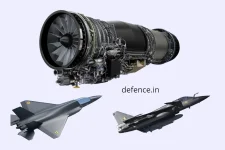
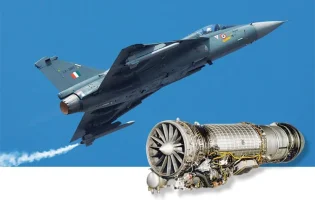
While the original GE F414 engine is slated to power both the Tejas Mk2 and the initial AMCA Mk1, the latest offer focuses on delivering a much more powerful engine in the 110 to 130 kilonewton (kN) thrust range.
Because the current AMCA airframe has already been designed to accommodate the physical dimensions of the F414, utilising a derivative engine would drastically reduce the need for structural changes.
This continuity in form factor would lower integration risks and speed up the overall development timeline for the advanced Mk2 stealth variant.
A central advantage of GE's pitch is its scalability and reliance on proven architecture.
By building upon the F414 foundation, the proposed engine provides a safer route to achieving higher thrust without disrupting established design parameters.
This strategy perfectly suits the Indian Air Force's requirement for steady, incremental capability improvements, avoiding major redesigns that could delay a highly complex project like the AMCA.
Despite these technical benefits, significant hurdles remain regarding Intellectual Property Rights (IPR) and the Transfer of Technology (ToT).
While GE previously agreed to a substantial 80% ToT for the standard F414, strict United States export regulations still restrict complete access to core technologies.
In contrast, India is insisting on 100% IPR ownership for the new 110–130 kN engine. Complete ownership is vital for India's "Atmanirbhar Bharat" goals, ensuring the nation can independently upgrade the engine and freely export the aircraft without foreign interference or end-use monitoring.
Meanwhile, the Ministry of Defence is actively assessing robust alternatives from European manufacturers Safran (France) and Rolls-Royce (United Kingdom).
Safran is reportedly offering a completely new engine design that guarantees 100% ToT and shared IPR, drawing upon the deep strategic trust established during the Rafale fighter jet deal and its reliable M88 engine.
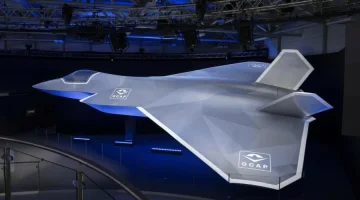
On the other hand, Rolls-Royce is proposing a bespoke 120 kN engine with full IP rights. The British firm is actively leveraging its unique historical experience from the F-35 Lightning II program—specifically its work on the F136 engine—and its involvement in the futuristic European Tempest fighter.
Furthermore, Rolls-Royce's pitch highlights potential cross-sector synergies, suggesting the core aero-engine technology could be adapted for marine propulsion to power future Indian Navy warships.
The final decision facing the Indian government extends far beyond mere technical specifications; it is a profound strategic choice.
Selecting GE would offer seamless continuity with current platforms like the Tejas Mk2 and AMCA Mk1, ensuring faster deployment and reducing integration headaches.
Conversely, partnering with Safran or Rolls-Royce would guarantee greater national sovereignty, providing India with unrestricted technological independence and access to next-generation propulsion concepts.
Authorities are currently weighing these three bids within a joint venture framework, and a final selection is anticipated shortly.
This decision will not only shape the future of the AMCA but also lay the foundation for India’s long-term goal of building a self-sufficient, world-class domestic defence and aero-engine industry.