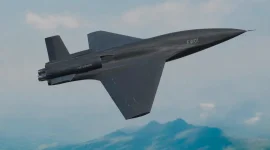
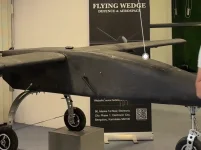
Bengaluru-headquartered defence technology firm Flying Wedge Defence and Aerospace (FWDA), led by founder Suhas Tejaskanda, is actively advancing a novel jet-propelled, high-subsonic Unmanned Combat Aerial Vehicle (UCAV).
Engineered with artificial intelligence at its core, this next-generation autonomous drone will heavily utilise advanced swarm warfare techniques.
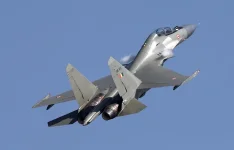
Measuring roughly six metres long—considerably more compact than the indigenous LCA Tejas—the platform is built to redefine unmanned aerial combat and provide a cost-effective alternative to traditional fighters.
A defining feature of this upcoming UCAV is its pioneering use of "mobbing" strategies, which marks a significant leap beyond traditional swarm operations.
Rather than simply flying in synchronised formations, mobbing involves a hyper-focused, predatory approach where a cluster of these drones converges to relentlessly attack a single premium asset, such as an advanced manned fighter jet.
Rooted in biological defence patterns found in nature, this method allows a multitude of smaller, less powerful units to collectively exhaust, disorient, and defeat a vastly superior opponent.
Tactically, the strategy hinges on releasing several low-cost UCAVs that execute synchronised assault trajectories to completely blind and overwhelm the defensive perimeters of sophisticated enemy aircraft.
By forcing hostile pilots to confront an array of simultaneous dangers from varying angles, the swarm is meant to jam sensor arrays, overload electronic warfare suites, and drain enemy ammunition.
This concept fits perfectly within the modern shift towards autonomous warfare, demonstrating how sheer numbers, combined with algorithmic precision, can serve as a lethal countermeasure against expensive but scarce air superiority platforms.
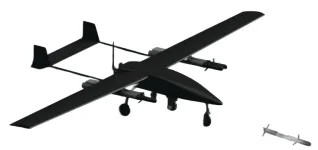
This directly builds upon FWDA's established expertise in the sector, having recently tested the FWD YAMA, an autonomous swarm interceptor designed for similar saturation and counter-drone engagements.
The manufacturer notes that these jet-powered UCAVs will be flown entirely by artificial intelligence, highlighting massive strides in onboard independent decision-making for route planning, threat recognition, and active engagement.
Although the company has kept the specifics regarding data link infrastructure, avionics, and human oversight under wraps, the operational blueprint heavily suggests a framework of collaborative autonomy.
This means the drones will seamlessly exchange battlefield intelligence and alter their combat manoeuvres in a fraction of a second without direct human intervention.
Furthermore, FWDA executives have stated that the UCAV's development is benefiting from the expertise of seasoned professionals who previously contributed to India's Tejas Mk1 fighter programme.
While a formal partnership with state-run aerospace institutions remains unverified, securing such specialised consultancy would undoubtedly elevate the drone's aerodynamic profile, complex flight control algorithms, and overall systems integration.
Regarding the project's timeline, FWDA confirms that preliminary ground evaluations are already in progress, paving the way for taxi trials in the coming months.
The startup is targeting a highly ambitious schedule to achieve the maiden flight.
Industry experts often note that developing jet-powered autonomous military hardware is inherently complex, with hurdles relating to stringent flight safety standards and intricate system pairings often pushing back projected deadlines.
However, as the first Indian private firm to historically secure DGCA type certification for indigenous UAVs, FWDA has a proven track record of successfully navigating aerospace regulatory frameworks.
Key specifications of the aircraft—such as its chosen jet propulsion system, maximum take-off weight (MTOW), flight endurance, carrying capacity, and exact weaponry configurations—are currently classified.
Ultimately, the successful disclosure and testing of these critical performance metrics will dictate if this ambitious project can transition from a promising prototype into a combat-ready force multiplier for modern air defence.