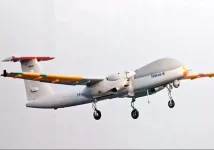
Hindustan Aeronautics Limited (HAL) has showcased an innovative, combat-ready cockpit design for its Hindustan Turbo Trainer-40 (HTT-40).
While the Indian Air Force (IAF) recently signed a ₹6,800 crore contract for 70 of these turboprop aircraft specifically for basic Stage-I pilot training, this new concept highlights the platform's untapped potential.
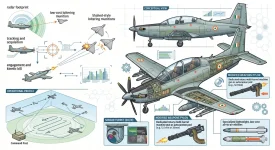
The design illustrates how the HTT-40 could be modified to deliver advanced tactical instruction, including formation flying, fighter manoeuvres, and weapon handling, even though the IAF has not yet formally requested such an upgrade.
The newly revealed setup is a significant shift from the standard, simpler training interface currently being produced for the IAF.
It introduces a modern "glass cockpit" that is highly representative of frontline combat aircraft.
By integrating fighter-style avionics at this early stage, the goal is to immerse rookie pilots in complex mission management environments long before they step into an actual jet.
To achieve this, HAL has replaced traditional layouts with multiple large Multi-Function Displays (MFDs) arranged precisely like those in modern fighters.
These digital screens seamlessly combine primary flight data and navigation with advanced tactical readouts, such as radar-simulated situational awareness and engine diagnostics.
This setup is specifically designed to replicate the heavy mental workload and rapid information flow that pilots will eventually face in combat.
A wide digital panel dominates the central console, tailored for advanced mission planning and map navigation.
This allows trainees to practice complex simulated range operations and route management under combat conditions.
The surrounding screens provide a layered, easy-to-read look at vital flight instrumentation and tactical symbols, closely mimicking the multi-screen environment of advanced fighters.
One of the most critical additions is a Head-Up Display (HUD) mounted directly in the pilot's line of sight.
The HUD is an essential tool for modern aerial combat and weapon delivery, allowing pilots to view targeting cues, weapon aiming symbols, and vital flight data without needing to look down into the cockpit.
This addition would dramatically increase the realism of simulated air-to-air and air-to-ground combat training.
Furthermore, the cockpit’s side panels and control interfaces have been completely redesigned for combat ergonomics.
The layout supports Hands-On Throttle and Stick (HOTAS) functionality, ensuring that pilots can operate crucial avionics and targeting systems without ever taking their hands off the primary flight controls.
This is an absolute necessity for surviving the high-stress environment of basic fighter manoeuvres.
Ultimately, this architecture positions the HTT-40 as a highly capable bridge between primary flight trainers and expensive Stage-III Advanced Jet Trainers (AJTs) like the BAE Hawk.
By using a cost-effective turboprop to simulate weapon strikes and tactical missions, the defence sector could save significant resources while better preparing pilots for advanced platforms.
Despite these impressive conceptual capabilities, the IAF’s current strategy remains unchanged.
The immediate focus for the HTT-40 is strictly foundational flying instruction to replace the long-grounded fleet of HPT-32 Deepak trainers.
For now, the combat-configured cockpit remains an exciting glimpse into what HAL can offer, pending any future requirements from the Indian defence establishment.