Speaking at the R Defence Forces First Conclave 2026, Bharat Forge Chairman Baba Kalyani revealed a major breakthrough in India's military manufacturing capabilities.
He announced the successful development of two highly advanced Future Infantry Combat Vehicle (FICV) prototypes—one tracked and one wheeled.
Created in partnership with Tata Advanced Systems under the Ministry of Defence’s Development-cum-Production Partner (DCPP) framework, these platforms are being hailed as some of the most technologically superior combat vehicles on the global stage.
A Leap in Indigenous Manufacturing
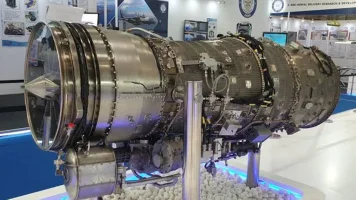
What sets these new infantry vehicles apart is their completely domestic origins.Kalyani emphasised that every major component of the FICV, including traditionally complex automotive subsystems like the engine and transmission, has been designed and built within India.
Achieving complete indigenisation in mobility components resolves a long-standing challenge for the Indian defence sector, which has historically relied on foreign suppliers for critical powertrain technologies.
Recent reports confirm that these advanced armoured platforms integrate state-of-the-art battlefield features.
The prototypes reportedly boast a 30mm crewless turret, amphibious capabilities through hydro-jet propulsion, and advanced modular ballistic protection capable of defending against direct and indirect fire.
Capable of carrying anti-tank guided missiles and accommodating a crew alongside fully kitted infantrymen, the platforms are tailored for diverse combat environments—from the high-altitude mountains of the Himalayas to the desert plains of Rajasthan.
Rejecting Outdated Foreign Equipment
Highlighting the growing technological independence of India's private defence industry, Kalyani took a firm stance against the import of ageing foreign military hardware.He pointedly remarked that the United States had recently attempted to offload "30-year-old junk" onto the Indian military.
While Kalyani did not specify the exact equipment, defence analysts suggest his comments likely reference ongoing discussions surrounding the procurement of older-generation armoured platforms like the US Stryker, which has faced scrutiny over its high-altitude performance and lack of amphibious capabilities essential for the Indian Army.
Replacing the Ageing BMP-2 Fleet
The successful rollout of these FICV prototypes marks a critical step forward for the Indian Army's long-term mechanisation strategy.For decades, the military has relied on a vast fleet of Russian-origin BMP-2 "Sarath" vehicles, which were first introduced in the 1980s.
The military is currently looking to replace thousands of these older models with a modern platform that offers superior mobility, advanced firepower, and digital integration to counter emerging threats like drone warfare and precision strikes.
If these domestically produced FICVs successfully pass upcoming user trials and enter serial production, it will be a transformative victory for the Aatmanirbhar Bharat initiative.
It will definitively prove that India's private sector can independently design, engineer, and mass-produce next-generation armoured fighting vehicles without relying on foreign technology.