The history of the Indian Air Force (IAF) contains a fascinating, yet often overlooked, episode from the late 1970s: the thwarted bid to acquire the Swedish Saab 37 Viggen.
While this fighter jet was widely celebrated as a marvel of European aviation, the deal ultimately fell through. The primary stumbling block was the American technology housed within the aircraft’s engine, which gave the United States the power to block its sale to India.
During this period, the IAF was actively seeking a cutting-edge platform to fulfill its Deep Penetration Strike Aircraft (DPSA) requirement.
The competition featured formidable contenders, notably the Dassault Mirage F1, the SEPECAT Jaguar, and the Saab Viggen.
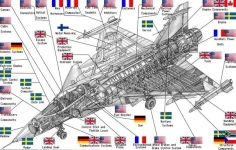
The Swedish jet emerged as a highly desirable candidate, boasting state-of-the-art avionics, the ability to launch low-level strikes at high speeds, and impressive short take-off and landing capabilities that allowed it to operate from dispersed road bases.
Despite its remarkable aerodynamic design and capabilities, the Viggen’s engine emerged as the fatal flaw for the proposed Indian acquisition.
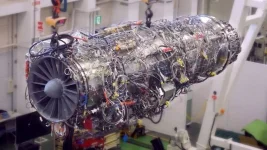
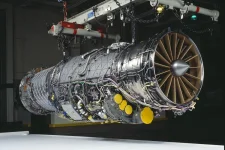
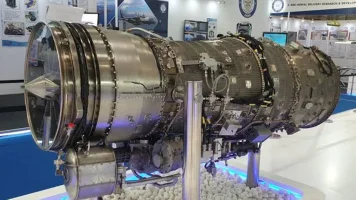
The Swedish jet relied on the Volvo RM8 turbofan engine for its thrust. This powerplant was essentially a heavily adapted, licence-manufactured version of the American Pratt & Whitney JT8D—an engine originally designed for civilian airliners but extensively modified in Sweden for supersonic military operations.
Although Volvo had significantly engineered the engine to suit combat requirements, the core technology remained governed by US export laws.
Consequently, the presence of American intellectual property and hardware meant that any international sale of the Volvo engine, or the Viggen aircraft that housed it, was legally contingent upon explicit clearance from the United States government.
The geopolitical climate of the Cold War dictated that Washington wielded its export control policies with a firm hand, especially concerning the transfer of sophisticated military hardware to nations that might leak it to communist adversaries.
Although India was a leading voice in the Non-Aligned Movement, New Delhi had cultivated a robust defence partnership with the Soviet Union, its primary arms supplier following the 1971 Indo-Soviet Treaty of Peace, Friendship, and Cooperation.
This close alignment naturally fueled American apprehensions about sharing cutting-edge technology.
Aviation historians and defence experts note that under the administration of President Jimmy Carter, who championed strict arms transfer restraint policies, the US refused to grant the necessary export licenses for the RM8 engine.
Without this crucial American approval, the Swedish aerospace industry was legally barred from selling the Viggen to India, permanently grounding the deal.
While the American veto on the engine is most frequently highlighted as the deal-breaker, India’s procurement journey was complex, involving various industrial, financial, and tactical assessments.
Historical records show that the Viggen had not yet officially won the DPSA contest before the American blockade occurred; rather, it was simply a leading competitor undergoing rigorous evaluation.
With the Swedish option off the table, the Indian government shifted its focus to other viable candidates. In 1978, New Delhi formally chose the SEPECAT Jaguar—a twin-engine strike fighter developed jointly by the United Kingdom and France.
Over the ensuing decades, the Jaguar, christened "Shamsher" by the IAF and later manufactured locally by Hindustan Aeronautics Limited (HAL), became a cornerstone of India's aerial strike capabilities.
Opting for the Jaguar was a highly pragmatic decision. Not only did the Anglo-French jet meet India’s demanding operational criteria, but it also completely bypassed the legal and diplomatic hurdles of third-party export controls that had doomed the Viggen.
This historical event serves as a clear demonstration of how international export regulations dictate the flow of global arms sales.
It highlights a critical reality: even if a weapon system is entirely built and branded by a non-US nation, the integration of American components—such as engines or avionics—grants Washington the ultimate authority to dictate where that system can be sold.
These third-party restrictions have repeatedly derailed or complicated military modernization efforts across the globe.
To this day, the reach of foreign export controls continues to govern the international defence trade, strictly regulating the movement of advanced propulsion systems and classified military technologies.
For Indian defence planners, the collapsed Viggen negotiations offered a harsh but valuable lesson regarding the dangers of relying on foreign-controlled hardware.
This realization laid the groundwork for India's long-term defence philosophy, accelerating the modern push toward self-reliance, domestic manufacturing, and securing unconditional technology transfers rather than settling for mere licence production.
Even though the Saab 37 Viggen never wore the roundels of the Indian Air Force, its story remains a captivating "what if" scenario among aviation enthusiasts.
The Swedish jet had the potential to be a formidable asset for India, but the realities of Cold War politics and strict US export laws ultimately cleared the runway for the SEPECAT Jaguar, which proudly served as India’s primary deep-strike bomber for over forty years.