- Views: 2K
- Replies: 4
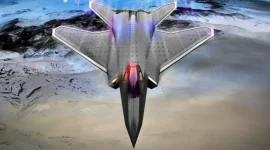
In June 2026, one of Europe's most ambitious joint military ventures, the Future Combat Air System (FCAS), officially fell apart.
The €100 billion programme, intended to create a sixth-generation "system-of-systems" combat network, succumbed to nearly a decade of industrial clashes, leadership struggles, and incompatible military requirements.
Its termination was formally announced at the ILA Berlin 2026 Aerospace Exhibition, closing a major chapter in European aerospace cooperation.
The Fall of a Mega-Project
The core of the failure lay in the inability of the main contractors—France's Dassault Aviation and Airbus, representing Germany and Spain—to find common ground.Beyond intense disputes over intellectual property and manufacturing workshares, the partner nations had fundamentally different visions for the aircraft.
Paris required a fighter capable of launching from aircraft carriers to support its naval and nuclear deterrence needs. Conversely, Berlin wanted a land-based jet focused heavily on air superiority.
These conflicting demands created an impossible design challenge.
Open-source tracking of the project indicates that a staggering €2.5 to €3.2 billion had already been spent over the last nine years on concept development, early research, and technology demonstrators before German Chancellor Friedrich Merz officially announced the end of the joint crewed fighter element.
India's Unencumbered Position
Despite recent speculation, New Delhi is not stepping in to become a partner in the FCAS programme, primarily because the original joint fighter initiative no longer exists.Instead, France—now expected to pursue a sovereign combat air strategy built around the Rafale F5 ecosystem—has reached out to India to discuss potential bilateral cooperation on next-generation aerospace technologies.
These talks are currently exploratory and represent a targeted avenue for collaboration rather than India joining a defunct European framework.
Dual Focus: AMCA and 6th-Gen Building Blocks
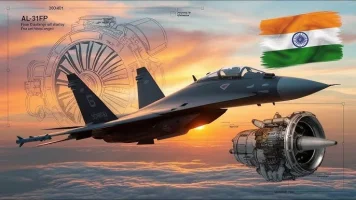
For India, the primary aerospace focus remains unchanged: the successful development and deployment of the indigenous Advanced Medium Combat Aircraft (AMCA), which will serve as the nation's frontline fifth-generation stealth fighter.However, to future-proof its air force, New Delhi is actively hunting for the technological building blocks required for sixth-generation warfare.
The Indian military establishment is seeking access to critical advancements, including:
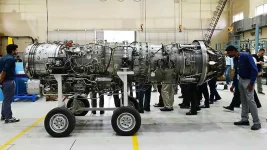
- Advanced propulsion and variable cycle engines
- Artificial intelligence integration
- Network-centric warfare architectures
- Collaborative combat systems and autonomous drones
The Shift in Global Defence Alliances
The breakdown of FCAS serves as a stark warning to the global defence sector about the perils of massive multinational development programmes.Endless negotiations over work allocation, leadership, and patent rights frequently lead to crippling delays and budget overruns that can kill a project entirely.
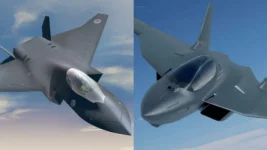
In contrast, alternative models like the Global Combat Air Programme (GCAP)—led by the United Kingdom, Italy, and Japan—are proving that a more streamlined, technologically aligned approach can be more effective.
GCAP's early development phases are moving forward with an estimated $20 billion budget, highlighting a clear industry shift away from bloated, prestige-driven alliances toward tighter, more focused partnerships.
A Strategic Opportunity for New Delhi
Ultimately, the disintegration of FCAS offers a unique strategic advantage for India.Rather than being tied to the rigid requirements and political compromises of a large multinational consortium, New Delhi can now forge highly specific technology pacts on its own terms.
Partnering with a now-independent France allows India to selectively co-develop vital components—such as secure Combat Cloud networks, advanced avionics, and loyal wingman unmanned systems—while keeping full control over its indigenous defence roadmap.