- Views: 35
- Replies: 1
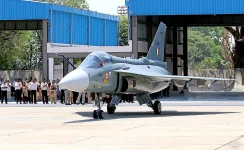
The handover of the Tejas Mark-1A (Mk1A) fighter jets, produced by Hindustan Aeronautics Limited (HAL), might experience further postponements beyond June 2026.
This potential delay has prompted high-level discussions involving the Indian Air Force (IAF), HAL, and the Ministry of Defence.
They are currently evaluating the combat readiness of the home-grown aircraft and considering whether to accept the jets with temporary limitations on certain non-essential functions to finally begin the much-awaited induction process.
According to reports, the IAF is showing flexibility and is willing to induct the Tejas Mk1A even if a few specific features are still undergoing refinement.
The strict condition for this compromise is that the aircraft must maintain its fundamental combat strengths, particularly concerning weapon systems, sensors, and electronic warfare hardware.
Any agreement to accept the jets under these revised terms would necessitate formal changes to the existing contract, a process managed directly by the Ministry of Defence.
The primary focus for the IAF is to guarantee that the new fighters are fully prepared for active duty and combat scenarios immediately upon entering service.
While the physical electronic warfare systems are present, the complex software required for full automation may need to be upgraded after the jets are delivered.
In the meantime, the IAF might temporarily accept the aircraft by having pilots manually control certain electronic warfare tasks, a method commonly used in older generation fighters.
Recent open-source updates indicate that rigorous software validation, radar communication, and system interoperability have been significant technical hurdles in finalising the aircraft's clearance.
This adaptable stance from the IAF underscores a pressing need to replenish its shrinking fighter squadrons.
The Tejas Mk1A project stands as a vital pillar in the IAF's strategy to acquire domestically built combat aircraft. In 2021, HAL was awarded a substantial ₹48,000 crore contract to deliver 83 Tejas Mk1A fighters.
However, since the original delivery target of early 2024, the programme has encountered repeated setbacks, with current open-source estimates suggesting that the completion of the entire 83-jet order could extend toward 2031.
To expedite the handover process, HAL had previously asked for certain waivers regarding the strict Air Staff Quality Requirements (ASQRs).
These ASQRs are mandatory performance and technical criteria that all defence equipment must satisfy before military use.
They set the baseline for crucial elements like avionics, radar efficiency, weapons integration, electronic warfare capabilities, and overall maintenance and mission reliability.
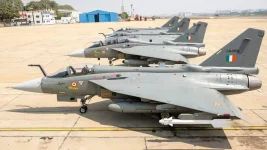
The Tejas Mk1A is a heavily upgraded version of the original Light Combat Aircraft, offering substantial technological advancements.
It is equipped with a modern Active Electronically Scanned Array (AESA) radar, a comprehensive electronic warfare suite, and the ability to engage targets beyond visual range.
Recent reports confirm that the aircraft has successfully completed critical weapons trials, including the successful test-firing of the indigenous Astra air-to-air missile.
The fighter is designed to be a core asset for the IAF's future fleet, heavily supporting the government's push for self-reliance in the defence manufacturing sector.
The broader delays in the Tejas Mk1A timeline are largely tied to global supply chain bottlenecks, most notably the slow delivery of F404-IN20 engines from the US-based GE Aerospace.
Out of an order for 99 engines, only a fraction had been delivered to HAL by early 2026, severely restricting the production line's capacity.
In a positive step to secure future fleet availability, the IAF recently signed an agreement with GE Aerospace to build a domestic maintenance and repair facility for these engines in India, which will eventually reduce reliance on foreign support and improve the operational readiness of the Tejas fleet once it enters service.