For a long time, China's Chengdu J-20 "Mighty Dragon" was considered a rare, high-tier stealth fighter, assigned only to a few select units within the People's Liberation Army Air Force (PLAAF).
Now, fresh deployment tracking reveals a major shift: the J-20 has quickly evolved from an exclusive strategic tool into a standard, widely used combat jet across the Chinese military.
When the aircraft first became operational in 2019, it was assigned to the 9th Aviation Brigade at Wuhu Air Base in eastern China. During this initial phase, the J-20 was treated as a symbol of military prestige, meant to be flown solely by a small number of elite squadrons.
Fast forward to 2026, and the situation looks completely different. The stealth fighter is now active in at least eight combat brigades, covering almost every regional command in the PLAAF.
Alongside the original 9th Brigade, the jets are now flown by the 1st, 5th, 8th, 41st, 56th, 97th, and 111th Aviation Brigades.
Crucially for India, the 111th Brigade in Korla and the 97th Brigade in Dazu operate under China's Western Theater Command, which oversees the border with India.
Moving J-20s into this specific command shows that China is now fully confident in using its most advanced fighters in regions where conflicts with India could arise.
The stationing of these jets at Korla Air Base is especially significant, as it acts as a central training and operational hub for China's western forces. Adding the J-20 to this region proves that the PLAAF has an ample supply of the aircraft and has successfully trained enough pilots to fly them.
Historically, introducing fifth-generation stealth jets is a slow process because they are incredibly complex to build, require specialized engines, and demand intense pilot training.
For instance, the United States spent many years building a sizable fleet of F-22 Raptors, and scaling up the F-35 program demanded a long period of continuous, high-volume manufacturing.
Based on the standard size of a Chinese aviation brigade—which usually holds 24 to 36 combat jets—the known force structure suggests a massive fleet.
Open-source intelligence and aerospace analysts now estimate that China has heavily ramped up its manufacturing facilities, with the total J-20 fleet likely exceeding 350 to 400 aircraft by early 2026, produced at an astonishing rate of roughly 100 jets per year.
This data clearly shows that China no longer views the J-20 as a rare asset to be guarded closely. Instead, the military has smoothly woven the stealth fighter into its everyday operations across all five of its major geographic commands—North, South, East, West, and Central.
While an "elite" weapon is kept in small batches for highly specific missions, a "mainstream" weapon is built into the military's daily planning and widespread strategy. The broad footprint of the J-20 confirms it has successfully made the leap to a mainstream combat platform.
For the Indian defence establishment, this development is a serious concern. The presence of J-20s in the Western Theater Command means that any future Chinese military maneuvers along the Line of Actual Control (LAC) will likely feature stealth fighters as a standard threat, rather than a rare occurrence.
Recent satellite imagery has already spotted these jets stationed at Tibet’s high-altitude Shigatse Air Base, less than 150 kilometers from the LAC in Sikkim.
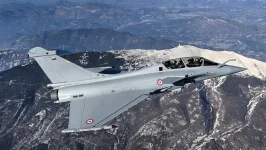
This proximity drastically reduces response times, forcing the Indian Air Force to rely heavily on its advanced Rafale fighters and robust radar networks to counter the stealth threat.
Furthermore, this rapid rollout showcases the sheer power of China's aerospace industry. Producing enough stealth jets to supply multiple brigades simultaneously requires a highly advanced manufacturing sector, a skilled workforce, and an unbreakable supply chain capable of churning out complex aircraft without delay.
Ultimately, the latest deployment patterns lead to one undeniable conclusion: the J-20 "Mighty Dragon" is far more than a display piece. It is now a core frontline fighter for China.
Its expanding presence near India's borders is a direct testament to China's booming military production and its readiness to leverage stealth technology in routine combat operations.