The induction of the Su-30 into the Indian Air Force (IAF) in 1997 stands as a defining moment in India’s military aviation journey.
Driven by a shifting security landscape—specifically Pakistan's acquisition of F-16s in the 1980s and the rapid modernisation of the Chinese air force in the 1990s—India sought a heavyweight fighter capable of deep strikes and long-range air dominance.
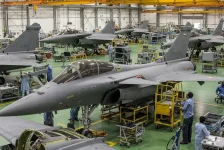
The IAF officially welcomed its first batch of Su-30K fighters into the No. 24 Squadron at Pune's Lohegaon Air Force Station, laying the foundation for what would become the cornerstone of India’s aerial combat power.
A Legacy of Defence Production
Following an initial agreement with Russia in 1996 for 50 jets, a landmark pact was signed in 2000 that allowed Hindustan Aeronautics Limited (HAL) to manufacture the Su-30MKI locally.This initiative blossomed into one of the most successful defence production efforts in the country's history. Over the years, the IAF expanded its fleet with subsequent orders in 2007 and 2012.
Recently, the government also moved to procure 12 additional jets, packed with over 60% indigenous components, to replace aircraft lost in accidents and keep the fleet close to its mandated strength of 272 fighters.
Tailored specifically for Indian requirements, the Su-30MKI boasts tremendous range, immense payload capacities, and thrust-vectoring engines that allow for unmatched manoeuvrability. For nearly three decades, it has reliably executed missions ranging from maritime strikes to air superiority.
The Threat of Technological Obsolescence
However, while the aircraft remains an impressive machine, its foundational technologies remain rooted in the turn of the millennium.The fleet has seen only minor software and weapon enhancements over the years, which pale in comparison to the sweeping technological leaps seen in modern military aviation.
Today, the regional threat matrix has evolved dramatically. Hostile nations are aggressively deploying advanced Active Electronically Scanned Array (AESA) radars, lethal electronic warfare (EW) systems, artificial intelligence (AI), and next-generation standoff weapons.
By the time the Su-30MKI fleet marks its 30th anniversary, adversaries will be dominating the skies with fifth-generation stealth fighters like China's J-20, and even early sixth-generation concepts.
Without a massive overhaul, India's premier fighter jet faces the very real danger of becoming technologically outdated in a modern, network-centric combat environment.
The 'Super Sukhoi' Transformation
To counter this growing disparity, the Ministry of Defence has outlined the ambitious "Super Sukhoi" modernisation programme—a monumental initiative valued at nearly ₹66,000 crore.Spearheaded by HAL and the Defence Research and Development Organisation (DRDO), the upgrade will transform the aircraft into a formidable 4.7-generation platform.
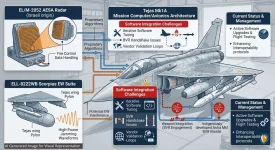
Recent open-source intelligence indicates that the heart of this transformation is the indigenous 'Virupaksha' AESA radar.
Utilizing cutting-edge Gallium Nitride (GaN) technology, this radar is expected to boost detection ranges by 50% and possesses the capability to track enemy stealth fighters.
The comprehensive package also integrates:
- Advanced Electronic Warfare: Including the indigenous 'Dhruti' radar warning receiver and new self-protection jammers.
- Next-Generation Avionics: Modernised glass cockpits with high-resolution digital displays and new mission computers.
- AI Integration: Artificial intelligence-assisted mission systems and predictive maintenance technologies being developed in collaboration with institutions like IIT Bombay.
- Lethal Weaponry: Integration of the long-range Astra family of air-to-air missiles, Rudram anti-radiation missiles, and advanced variants of the supersonic BrahMos.
A Crucial Bridge to the Future
Currently, crucial ground testing for the Virupaksha radar's radome is underway, marking a significant milestone in the project's timeline.The first phase of the upgrade will cover 84 aircraft, eventually expanding to nearly 200 jets across the fleet.
This massive modernisation effort is not just about keeping an older aircraft flying; it is an absolute strategic necessity.
With indigenous programmes like the Tejas Mk-2 and the fifth-generation Advanced Medium Combat Aircraft (AMCA) still years away from entering mass production, the IAF's squadron numbers are under immense pressure.
Accelerating the Super Sukhoi upgrade is vital to ensuring India’s heaviest fighter remains a credible and lethal deterrent well into the 2050s.