- Views: 3K
- Replies: 6
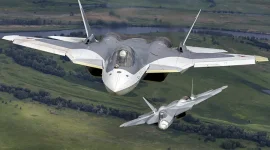
The arrival of advanced, fifth-generation stealth aircraft like the Shenyang J-35 in the region is changing the rules of modern air combat.
Traditionally, stealth fighters rely on a "first look, first shot, first kill" strategy, assuming they can dictate the terms of engagement by remaining unseen.
With reports indicating that Pakistan could receive up to 40 J-35 jets from China by mid-2026, the Indian Air Force (IAF) is rapidly preparing a countermeasure.
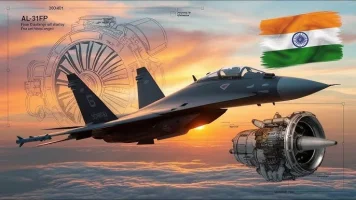
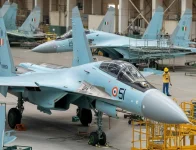
The answer lies in the "Super Sukhoi" upgrade for India's Su-30MKI fleet. By combining a highly powerful, large-aperture radar with a new long-range missile, the IAF aims to shrink the advantage of stealth.
While the J-35 remains a formidable threat, this upgrade ensures that long-range air combat will be decided by superior sensors, sustained missile speed, and smart networking, rather than just stealth alone.
The first major component of this upgrade is the indigenously developed Virupaksha Active Electronically Scanned Array (AESA) radar.
Built by the Defence Research and Development Organisation (DRDO) to replace the older Russian-made Bars system, the Virupaksha represents a massive leap in technology.
It uses advanced Gallium Nitride (GaN) components and features over 2,400 transmit and receive modules, making it exceptionally powerful and sensitive.
Because stealth technology does not make an aircraft completely invisible—it merely reduces its radar signature—a radar with this much raw power can spot a low-profile jet like the J-35 from much further away.
By pushing the detection threshold outward, the IAF can prepare its weapons and coordinate with other friendly forces far earlier in an engagement.
The second crucial element is the Astra Mk3 air-to-air missile, also known as the 'Gandiva'.
Standard long-range missiles use solid rocket motors that burn out quickly, meaning the missile simply coasts towards its target and loses speed and turning ability at the end of its flight.
The Astra Mk3 solves this by using Solid Fuel Ducted Ramjet (SFDR) technology.
By breathing in oxygen from the atmosphere as it flies, the missile can maintain its thrust and fly at speeds up to Mach 4.5 over a staggering range of 300 to 350 kilometres.
This sustained energy means that even at extreme distances, the missile remains highly manoeuvrable.
Enemy aircraft executing sharp turns or diving to avoid being hit will find it incredibly difficult to escape the Astra Mk3's terminal phase.
Equally critical to this strategy is how these advanced tools communicate with the rest of the military network.
The upgraded Su-30MKI will act as a heavily armed node connected to a broader web of sensors, including ground radars and airborne early warning aircraft (AWACS).
This connectivity enables a tactic where an Indian fighter can launch the Astra Mk3 based on targeting data provided by a different radar system entirely.
By keeping its own radar switched off, the Su-30MKI can remain hidden from enemy detection. The missile then receives location updates mid-flight via secure datalinks.
Because the target never receives a traditional warning that a fighter jet has locked onto it, the enemy pilot has very little time to react or deploy defensive measures.
When facing a stealth platform like the J-35, this integrated approach fundamentally shifts the balance of power.
The J-35 is designed to fly undetected and carry its weapons internally, giving it a distinct advantage in shaping how a battle begins.
However, it must now deal with the reality of being spotted earlier by the Virupaksha radar and facing the relentless pursuit of the Astra Mk3 missile.
Even though the Chinese-made stealth fighter may carry excellent weapons of its own, those conventional solid-rocket missiles face the same traditional energy limitations at long ranges.
Ultimately, the comprehensive Indian defence strategy dramatically narrows the window of opportunity that stealth aircraft usually rely upon.
However, executing this high-tech vision comes with practical challenges.
Spotting a stealth aircraft at a great distance is only the first step; maintaining a steady lock while the enemy uses advanced electronic jamming equipment to confuse the radar is much harder.
Furthermore, manufacturing ramjet-powered missiles involves overcoming immense engineering hurdles, such as managing extreme heat and ensuring seamless integration with the aircraft's systems.
Finally, this entire "silent sniping" strategy relies on flawless communication networks. If the datalinks are disrupted or the electromagnetic environment becomes heavily contested, the effectiveness of the Super Sukhoi's new combat network could be significantly reduced.