- Views: 2K
- Replies: 2
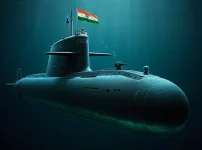
India's naval forces are currently undertaking a massive and unprecedented effort to standardise their underwater warfare capabilities.
The ambitious initiative involves designing the upcoming Project-77 nuclear-powered attack submarines (SSNs) and the Project-76 next-generation conventional submarines (SSKs) using a shared foundation of sensors, subsystems, and combat architectures.
By harmonising these two distinct vessel types, the Navy aims to build a robust, interconnected underwater fleet.
Defence insiders indicate that military planners have pinpointed several essential technologies to be utilised across both submarine classes.
This strategy is designed to boost domestic manufacturing, significantly reduce long-term reliance on overseas vendors, and make crew training more straightforward.
Ultimately, the goal is to establish a cohesive "National Submarine" framework that will serve as the baseline for all future underwater platforms.
The cornerstone of this integration is a domestically developed Combat Management System (CMS). This advanced software will act as the central operational hub for both the conventional and nuclear submarine variants.
Featuring a modular design, the new CMS will manage vital functions such as sensor data fusion, weapon targeting, navigation, and overall battlefield management for both the P-76 and P-77 platforms.
Furthermore, the Navy intends to install identical multi-function displays and operator consoles across both fleets. This commonality will streamline software updates, ease maintenance burdens, and allow sailors to transition seamlessly between different submarine types.
This unified approach marks a significant shift from India's historical procurement strategy. In the past, the country acquired various imported submarine classes, each tethered to unique, foreign-built combat systems and maintenance networks.
Situational awareness and mast technologies are also being harmonised. Both upcoming classes will abandon traditional optical periscopes that breach the pressure hull.
Instead, they will feature cutting-edge, non-penetrating optronic masts created by the Instruments Research and Development Establishment (IRDE).
These modern masts will capture high-definition, thermal, and infrared imagery, instantly feeding digital battlefield intelligence into the CMS via secure fiber-optic lines.
In addition to visual sensors, both fleets will share electronic warfare packages, communication masts, and Electronic Support Measures (ESM). This will guarantee a uniform standard of signal intelligence and situational awareness across the entire submarine force.
The offensive capabilities of the SSNs and SSKs are undergoing a similar convergence. Both variants will be armed with the domestically produced Varunastra heavyweight torpedo, as well as the advanced Takshak torpedo which is currently in development.
Open-source intelligence indicates that the larger Project-77 vessels will boast a 24-cell Vertical Launch System (VLS) to deploy hypersonic and land-attack weapons.
Despite the size difference, the digital interfaces used to launch weapons like the Nirbhay cruise missiles and future BrahMos hypersonic systems will be nearly identical on both platforms.
By maintaining this shared architecture, the Project-76 diesel-electric submarines could potentially fire the same advanced missiles using their torpedo tubes or adaptable vertical launch modules. This enhances tactical versatility while keeping logistical supply chains uncomplicated.
Underwater detection will be managed by a uniform Integrated Sonar System (ISS), designed by the Naval Physical and Oceanographic Laboratory (NPOL).
This comprehensive acoustic suite will equip both classes with bow, flank, and towed-array sonars, alongside passive interceptors to track adversarial vessels effectively.
To remain undetected, the hulls of both submarine types will be covered in specialised, locally manufactured anechoic tiles. These rubberised coatings are crucial for absorbing enemy sonar waves and dampening internal machinery noise.
A remarkable point of technological crossover is in acoustic silencing.
The Project-77 SSNs will run on continuous nuclear power, while the Project-76 SSKs will utilise diesel-electric engines paired with Air Independent Propulsion (AIP) modules.
However, the Navy is investigating the use of a shared pump-jet propulsion mechanism for both variants. Pump-jets drastically reduce the noise generated by moving water compared to standard propellers, making them vital for the stealth of modern submarines.
Naturally, the two submarine classes will serve distinct strategic purposes and differ greatly in size.
Recent open-source reports highlight that the Project-77 nuclear attack submarines will displace roughly 10,000 tonnes and be powered by a formidable 190 Megawatt (MW) compact light-water reactor.
Conversely, the Project-76 conventional boats will displace around 3,000 tonnes and depend on advanced lithium-ion batteries and AIP technologies.
Despite these differences, naval leadership is determined to enforce maximum commonality. Everything from acoustic management and battery banks to sonar designs and weapon interfaces will be shared between the two projects.
Both classes of submarines will be constructed using specialised high-tensile steel—such as the advanced HY-130 grade—engineered by the state-owned firm MIDHANI, providing a massive boost to the domestic defence manufacturing sector.
Defence officials note that this standardisation blueprint is carefully crafted to help the nation avoid the so-called "Chakra trap."
By eliminating the heavy reliance on imported technologies, India ensures it will no longer face crippling vulnerabilities regarding spare parts, routine maintenance, and critical upgrades in the decades to come.