Cyprus is showing significant enthusiasm for purchasing military hardware from India.
A major driving force behind this deepening military relationship is the battle-proven performance of New Delhi’s weaponry during Operation Sindoor.
According to officials from Cyprus, the effective use of advanced Indian military equipment during the May 2025 clash with Pakistan proved the reliability and combat readiness of India’s defence manufacturing sector.
Initiated in response to the tragic April 22 Pahalgam terror attack, Operation Sindoor unfolded over 88 hours between May 7 and May 10, 2025.
The intense conflict featured a massive deployment of precision-guided munitions, unmanned aerial vehicles, electronic warfare units, and long-range strike platforms.
For Cyprus, this brief but high-intensity operation served as a live demonstration of India’s homegrown and co-developed combat technologies.
As one Cypriot official remarked regarding future military ties, India’s capabilities are well known because they were successfully validated in a real-world battlefield scenario.
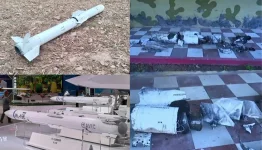
Reports indicate that Cyprus is placing a high priority on acquiring Indian kamikaze drones—also known as loitering munitions—alongside exploring the potential purchase of the BrahMos supersonic cruise missile.
This shift toward advanced strike capabilities is largely driven by mounting security anxieties in the Eastern Mediterranean, specifically in response to Turkey’s growing naval footprint and expanding drone fleet.
The momentum for these arms acquisitions has been further boosted by a newly established 2026–2031 defence cooperation roadmap, signed recently by Prime Minister Narendra Modi and Cypriot President Nikos Christodoulides, which elevated bilateral ties to a strategic partnership.
The government in Nicosia sees drone systems designed and manufactured in India as a practical and budget-friendly answer to Turkey’s expanding arsenal of unmanned aircraft, such as the Bayraktar TB2.
Over the past ten years, Turkish drones have reshaped the dynamics of warfare in regions like Syria, Libya, and the South Caucasus. To counter this, Cyprus is actively looking for reliable precision strike and anti-drone weapons that can complicate and deter Turkish military operations.
India’s loitering munitions have drawn international praise for their pinpoint accuracy, dependability in the field, and affordability when compared to Western equivalents.
Backed by the Defence Research and Development Organisation (DRDO) and private tech firms, India’s drone industry has grown rapidly, producing systems that are now actively serving in the Indian armed forces.
Cyprus is particularly keen on securing drones that can take out hostile radars, armoured vehicles, and naval ships in highly contested airspace.
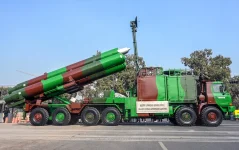
Adding further strategic weight to these discussions is the potential export of the BrahMos cruise missile to the Mediterranean nation.
Built through a joint venture between India and Russia, the BrahMos is recognized as one of the fastest operational cruise missiles globally, flying at speeds near Mach 3.
Its combination of low-altitude skimming, immense speed, and devastating kinetic energy makes it nearly impossible for traditional air defence systems to intercept.
Introducing the BrahMos into Cyprus would drastically shift the balance of power in the Eastern Mediterranean.
Armed with exceptional speed and a range capable of striking high-value targets, the missile would grant Cyprus a formidable deterrent against both land and sea threats.
Such an acquisition would pose a serious challenge to adversarial naval forces and military installations, effectively restricting Turkish naval movements near contested maritime borders and offshore gas exploration zones.
This prospective arms agreement also holds profound geopolitical weight.
Turkey has maintained a robust military and political alliance with Pakistan for years, backing Islamabad's stance on Kashmir and supplying the Pakistani armed forces with modern drones.
From New Delhi's perspective, the tightening partnership between Turkey, Pakistan, and Azerbaijan represents an emerging axis that directly challenges India’s geopolitical interests.
By increasing its defence exports—which recently surpassed the record $4.1 billion mark—and forging stronger military ties with Cyprus, Greece, and Armenia, India is engaging in strategic balancing.
Supplying arms to countries that share friction with Turkey allows New Delhi to subtly apply pressure on the Ankara-Islamabad-Baku triad, steadily expanding India’s strategic footprint across the Mediterranean and European theatres.