The Indian Air Force (IAF) is prioritizing access to Interface Control Documents (ICDs) as a non-negotiable technological requirement for its upcoming $43 billion Multi-Role Fighter Aircraft (MRFA) programme.
Under this massive procurement initiative, India plans to acquire 114 modern fighter jets.
By securing ICDs, the IAF aims to guarantee that Indian engineers can seamlessly equip these foreign jets with homegrown weapons, sensors, and avionics without being perpetually dependent on the foreign manufacturer.
According to a senior IAF official, India is intentionally steering clear of demanding the highly classified "source code" for the aircraft.
The source code acts as the core digital brain of a fighter, managing critical flight controls, avionics, and electronic warfare logic—secrets that advanced aerospace nations almost never share, even with strategic partners. Instead, the IAF's focus is entirely on obtaining the ICDs.
Functioning as a technical blueprint, an Interface Control Document outlines exactly how different electronic systems on the aircraft communicate. It details the data exchange protocols, electrical standards, and software pathways.
In practical terms, having the ICDs allows a third party to build and attach new weapons or subsystems that can "talk" to the aircraft's main computer, all without ever needing to look at the protected source code.
For the IAF, securing this level of technical access is a vital step toward long-term operational independence and financial efficiency.
Historically, whenever India wanted to add a new missile to an imported fighter, it had to hire the Original Equipment Manufacturer (OEM) for the integration process.
This traditional route frequently results in expensive contracts, drawn-out testing phases, and a heavy reliance on foreign technicians.
This requirement is increasingly urgent as India’s domestic defence industry rapidly expands its portfolio of advanced weaponry.
With ICD access, organisations like the Defence Research and Development Organisation (DRDO), Hindustan Aeronautics Limited (HAL), Bharat Electronics Limited (BEL), and private defence contractors will have the freedom to independently arm the MRFA fleet.
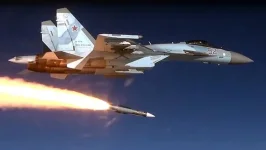
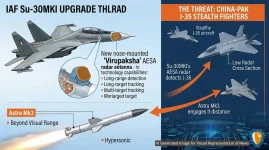
This will streamline the integration of indigenous systems like the Astra beyond-visual-range (BVR) air-to-air missiles, the Rudram family of anti-radiation missiles, and the Smart Anti-Airfield Weapon (SAAW), saving significant time and lifecycle costs over the aircraft's service life.
Looking ahead, the IAF is already drafting long-term modernization strategies for the MRFA fleet.
Defence officials are internally evaluating the prospect of a mid-life upgrade in the mid-2030s, which could involve removing the aircraft's original imported radar and replacing it with an advanced, Indian-made system.
Such an upgrade would be a watershed moment for India's military aviation sector.
In the past, foreign jets flown by the IAF relied exclusively on imported radars and avionics ecosystems from induction to retirement.
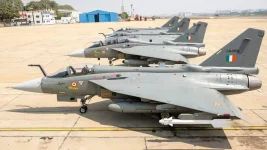
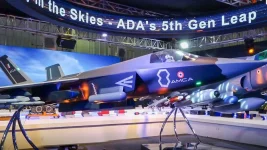
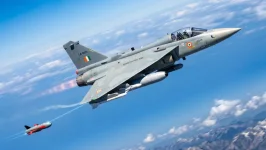
However, India's successful development of indigenous Active Electronically Scanned Array (AESA) technology—such as the Uttam AESA radar slated for the Tejas Mk1A, Mk2, and the future Advanced Medium Combat Aircraft (AMCA)—has shifted this dynamic.
Fielding a domestic AESA radar on a foreign jet would give India unrestricted control over the aircraft's targeting software and domestic maintenance schedules.
While swapping out a primary radar will still require some level of cooperation and safety certification from the foreign OEM and its host government, securing ICD access from the very beginning will lay the groundwork for this transition.
As aerospace giants from the United States, France, Sweden, and elsewhere prepare to compete for the lucrative 114-jet contract, their willingness to share these crucial interface blueprints will likely be a deciding factor in the MRFA competition.