The Indian Air Force (IAF) and the Japan Air Self-Defence Force (JASDF) are conducting the second iteration of Exercise Veer Guardian from 9 to 22 September 2026 at the Jodhpur Air Force Station in Rajasthan.
This bilateral air-combat drill builds on the inaugural edition held in Japan in January 2023, marking a significant step forward in military cooperation between New Delhi and Tokyo.
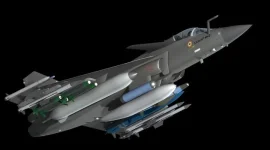
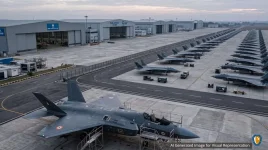
This year's exercise offers a profound strategic advantage for India, as it is the first time Japan has deployed its Mitsubishi F-2A fighter aircraft to an Indian air base.
The Japanese contingent, comprising approximately 110 personnel from the 8th Air Wing based at Tsuiki Air Base, has already commenced its arrival. Their deployment is supported by JASDF Kawasaki C-2 transport aircraft that landed in Jodhpur prior to the combat drills.
According to official statements, the joint training aims to strengthen interoperability, operational synergy, and mutual understanding between the two nations' aviators.
It serves to solidify the expanding defence partnership and trust-building efforts between India and Japan amidst shifting regional security dynamics.
Japan has dispatched three F-2A multi-role fighters for the event. This unprecedented deployment represents the first instance of Japanese combat aircraft operating directly from Indian soil for a bilateral military engagement.
The presence of the F-2 holds exceptional tactical value due to its direct evolutionary lineage from the American F-16 Fighting Falcon.
Co-developed by Mitsubishi Heavy Industries and Lockheed Martin in the 1990s, the "Viper Zero"—as the F-2 is popularly known—maintains the core aerodynamic profile and fundamental design characteristics of the F-16, despite being a heavily modified and physically larger airframe.
This shared ancestry is highly relevant to Indian defence interests. The Pakistan Air Force currently operates a fleet of approximately 75 to 80 F-16 Fighting Falcons, which continue to serve as a cornerstone of their frontline combat capabilities.
By participating in simulated combat scenarios both alongside and against the Japanese F-2, IAF aviators gain an invaluable opportunity. They can directly observe, study, and formulate tactics against an aircraft that heavily mirrors the F-16 in terms of size, shape, and overall physical configuration.
The tactical insights gained from this exposure are crucial for future combat readiness, particularly considering that Pakistan has historically utilised its F-16 fleet in engagements against India, such as during Operation Sindoor. This practical experience allows Indian forces to refine their countermeasures against a familiar threat platform.
While derived from the American jet, the F-2 is distinct. Japanese engineers incorporated a 25 per cent larger wing area crafted with advanced co-cured composite materials, extended the fuselage, and enlarged the horizontal tails.
These structural enhancements provide the F-2 with increased internal fuel capacity and additional weapon hardpoints, ultimately delivering superior range, endurance, and ordnance flexibility compared to standard F-16 variants.
Furthermore, the Mitsubishi F-2 made aviation history as the world's first operational production fighter to be equipped with an Active Electronically Scanned Array (AESA) radar system.
The indigenous Mitsubishi Electric J/APG-1 radar grants the aircraft exceptional target detection, multi-target tracking, and electronic jamming resistance.
Beyond its radar, the fighter is heavily customised with Japanese-developed internal systems. These include an indigenous fly-by-wire flight control system and a highly integrated electronic countermeasures suite tailored for complex, heavily contested combat environments.
Although engineered as a versatile multi-role platform capable of handling both air-to-air engagements and close air support, the F-2 was originally conceptualised to excel in anti-ship and maritime strike missions.
Its specialised proficiency in neutralizing sea-based threats aligns perfectly with India’s own strategic focus on securing its extensive maritime borders.
For the IAF, going head-to-head with the F-2 during the drills translates directly into hard combat experience against a near-replica of Pakistan's premier fighter jet.
Simultaneously, Indian crews will practice defeating sophisticated AESA radars and advanced electronic warfare suites in a realistic training environment.
This hands-on exposure significantly heightens combat preparedness and tactical adaptability for real-world engagements.
The Jodhpur drills also reflect the accelerating strategic partnership between India and Japan, which continues to deepen across the realms of defence production, maritime security, and advanced technological cooperation.
Consequently, Exercise Veer Guardian serves a dual purpose.
Tactically, the dissimilar air combat training forces pilots to adapt to unfamiliar radar signatures, novel weapon systems, and unique manoeuvring characteristics that they do not typically encounter within their own squadrons.
Strategically, the presence of Japanese combat aircraft in Rajasthan reinforces the tightening defence axis between New Delhi and Tokyo. It sends a clear signal of unity and shared objectives in the Indo-Pacific region amid a backdrop of escalating geopolitical tensions.