- Views: 2K
- Replies: 10
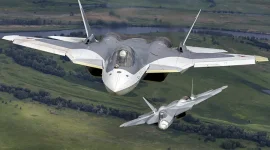
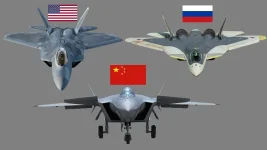
The possibility of Pakistan acquiring the Chinese-made J-31 (also known as FC-31) stealth fighter has sparked discussions in India about countering the move by swiftly purchasing Russia’s Su-57.
While this might seem like a simple way to maintain parity in the skies, such a decision could trap the Indian Air Force (IAF) in an expensive and restrictive path.
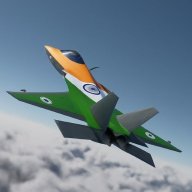
India is currently reshaping its entire aviation industry around the indigenous Advanced Medium Combat Aircraft (AMCA) programme, aiming for a prototype rollout by 2026-2027 through a newly adopted private-sector-led model.
The core issue is not whether the Russian jet is a capable machine, but rather that it contradicts India’s long-term military strategy, industrial ambitions, and the need to excel in modern, sensor-driven stealth warfare.
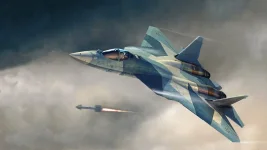
The primary drawback of the Su-57 lies in its stealth capabilities. Russian engineers adopted a hybrid design approach, favouring aerodynamic performance and speed over strict radar invisibility.
Consequently, the aircraft features air intakes and a general shape that do not minimise its frontal radar cross-section as effectively as jets dedicated entirely to stealth, such as the F-35 or the Chinese J-31.
In modern aerial combat where missiles are fired beyond visual range, being detected first is a fatal disadvantage.
Because it is not fully optimised for low observability, the Russian fighter risks being spotted and targeted earlier than its competitors.
Propulsion presents another major hurdle.
The current fleet of Su-57s largely operates on older, interim engines developed from the AL-41 family, as the advanced "Izdeliye 30" powerplants are still experiencing prolonged development and integration phases.
Using older engines significantly diminishes the aircraft's efficiency during supersonic flight without afterburners (supercruise), increases fuel consumption, and raises the thermal signature.
In combat, a hotter engine exhaust makes the aircraft much more visible to modern Infrared Search and Track (IRST) sensors, directly threatening the fighter's ability to survive in highly defended airspace.
Furthermore, acquiring the Su-57 carries severe strategic supply chain risks.
Russia’s defence manufacturing sector is heavily strained and prioritising its own domestic requirements, which has already caused delays in various military deliveries to India.
Maintaining a fifth-generation fighter fleet is a decades-long commitment that requires a steady flow of spare parts, engine overhauls, and continuous software updates.
Relying on foreign supply lines—especially those vulnerable to international sanctions and component shortages—could critically reduce the operational readiness of the aircraft. Additionally, dependence on foreign microelectronics introduces a permanent vulnerability into India's mission systems.
However, the most significant danger of buying the Su-57 is the damage it would inflict on India's own aerospace industry.
The indigenous AMCA programme is being driven by a Special Purpose Vehicle (SPV) that brings in major private companies—with industry leaders like Tata Advanced Systems and Larsen & Toubro expected to play pivotal roles—to build a self-reliant defence ecosystem.
Spending an estimated $10 to $15 billion on importing Russian jets would siphon crucial funds, engineering talent, and testing infrastructure away from the AMCA at a vital stage.
The SPV model aims to speed up development by sharing risks and resources, and diverting focus to a foreign jet would severely delay India's journey toward becoming a sovereign designer and builder of advanced combat aircraft.
Owning the underlying software is also crucial for modern air power.
Today’s combat jets rely heavily on complex code and digital mission systems. Buying a foreign aircraft means accepting a "black-box" system where the IAF would remain a mere end-user, dependent on another country's permission to upgrade sensors or integrate new weapons.
The AMCA, conversely, grants India total ownership of the source code. This absolute control will allow the quick addition of homegrown weapons—like the Astra series of air-to-air missiles—and other long-range munitions without needing external clearance, ensuring the IAF remains adaptable against emerging threats.
The high cost of maintaining a stealth fighter fleet further weakens the argument for the Su-57.
Operating low-observable aircraft requires intensive upkeep, specialized climate-controlled hangars, and frequent repairs to delicate radar-absorbing coatings.
The IAF has previously faced challenges maintaining high availability rates for its large, non-stealth Su-30MKI fleet despite producing parts locally.
Importing an even more maintenance-heavy aircraft without a solid, homegrown support network could result in a "white elephant"—a tremendously expensive asset that looks powerful on paper but is rarely ready to fly when needed.
While the potential arrival of the Chinese J-31 in Pakistan undeniably alters the regional security environment, rushing to buy a compromised and logistically risky Russian fighter is not the ideal solution.
A smarter and more sustainable strategy is already in motion: utilising the upcoming Tejas Mk2 and the highly capable Rafale fleet as a high-tech bridge to counter immediate threats.
By doing so, India can preserve its immediate defensive strength while concentrating its wealth and resources entirely on the AMCA programme to secure total aerospace independence in the future.