- Views: 2K
- Replies: 7
India’s quest to develop world-class indigenous aero engines may have found an unexpected opportunity in the United States.
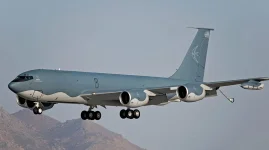
A decommissioned Russian-made Ilyushin Il-78 mid-air refuelling aircraft, which has been converted into a heavy-lift freighter, is currently on the market.
This availability presents a unique chance for India to acquire a dedicated Flying Test Bed (FTB)—a critical asset needed to rigorously test and validate its upcoming powerplants, including the ambitious 120kN-class engine for the Advanced Medium Combat Aircraft (AMCA) Mk2 and the revitalised Kaveri 2.0 project.
The aircraft in question, manufactured in 1988, has been completely stripped of its original aerial refuelling gear, including its underwing pods and internal fuel transfer systems, transforming it into a standard Il-76-style cargo plane.
Currently holding the US registration N20NS, the freighter is owned by Meridican Inc., a corporation based in Philadelphia, Pennsylvania.
Stationed at Marquette Sawyer Airport in Michigan, the aircraft boasts a massive 54-tonne payload capacity and is reportedly available for immediate purchase.
Impressively, the airframe has logged only about 4,350 flight hours, which is considered highly underutilised for a heavy-lifter of its size, indicating a substantial remaining service life.
From a technical perspective, the Il-76/78 family is an ideal candidate for airborne engine testing.
Its spacious interior and rear loading ramp make it highly suitable for installing the heavy telemetry equipment, data-recording servers, and complex instrumentation needed to monitor an experimental engine in real time.
Historically, the Russian aerospace industry has heavily relied on modified Il-76 aircraft to serve as flying testbeds.
In fact, India’s own Defence Research and Development Organisation (DRDO) previously utilised a Russian Il-76 flying testbed at the Gromov Flight Research Institute in Moscow back in 2010 to conduct high-altitude flight trials for the original Kaveri engine prototypes.
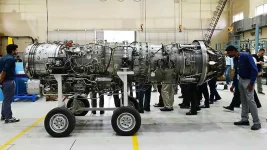
Currently, India’s Gas Turbine Research Establishment (GTRE) faces a major hurdle: the lack of a domestic FTB.
While ground-based testing facilities are vital, they cannot perfectly simulate the extreme and dynamic conditions of actual flight.
Real-world airborne testing is absolutely essential to evaluate how an engine handles sudden throttle changes under structural load, varying thermal stresses, dynamic airflow distortion, and mid-air engine restarts at high altitudes.
Without a dedicated flying laboratory, certifying the 120kN AMCA engine and the Kaveri 2.0 for combat operations will continue to face strict limitations.
Procuring an existing, structurally proven aircraft like the N20NS could save DRDO and its partners years of development time.
Building a custom testbed from the ground up, or taking an active transport aircraft out of the military's current fleet for permanent modification, would be highly expensive and operationally disruptive.
Furthermore, the aircraft's existing internal plumbing could potentially be repurposed for testing advanced fuel systems or deploying emergency fire suppression mechanisms during high-risk engine trials.
Despite the obvious benefits, acquiring this US-based Il-78 is not without significant challenges:
- Geopolitical and Regulatory Hurdles: Because the aircraft is of Russian origin but carries a US registration, buying it would require navigating a complex maze of export controls and international sanctions. Clearances would be mandatory from American authorities, and potentially from the original Russian manufacturers depending on component-level restrictions.
- Maintenance and Spares: The global supply chain for the Il-76 family has become increasingly fragmented due to ongoing geopolitical tensions. Guaranteeing a steady flow of spare parts, maintenance expertise, and long-term airworthiness certifications would require a robust support strategy, likely demanding heavy involvement from the Indian private sector.
- Complex Engineering: Turning a cargo plane into a flying laboratory is a massive engineering undertaking. Mounting an experimental engine—whether under the wing, on the side of the fuselage, or on the nose—requires drastic structural reinforcements. This integration would necessitate seamless collaboration between DRDO, Hindustan Aeronautics Limited (HAL), and private aerospace engineering firms.
The absence of an indigenous flying testbed has historically been a major stumbling block in India’s efforts to achieve self-reliance in military aerospace propulsion.
Acquiring and modifying a platform like this Il-78 could provide Indian scientists with the rapid prototyping and flight validation capabilities that are standard practice in the world's leading aerospace nations.