- Views: 3K
- Replies: 9
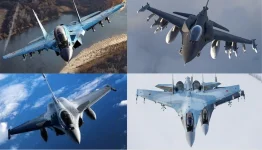
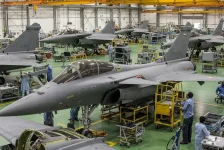
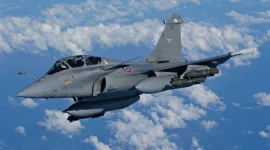
The Indian Air Force (IAF) has firmly clarified that its proposed acquisition of 114 Multi-Role Fighter Aircraft (MRFA)—with the French Rafale emerging as the frontrunner—will not compromise the financial or developmental roadmap of India’s indigenous fighter programmes.
Defence sources confirm that funding and timelines for the next-generation Tejas Mk2 and the Advanced Medium Combat Aircraft (AMCA) remain insulated from the import procurement, safeguarding the nation’s long-term goal of self-reliance in aerospace defence.
Indigenous Timelines Remain Unaffected
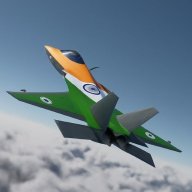
According to senior defence officials, the strategic planning for the 114-jet procurement is being handled independently of domestic projects.The Tejas Mk2, designed as a potent medium-weight fighter to replace ageing fleets like the Mirage 2000 and Jaguar, and the AMCA, India’s foray into fifth-generation stealth technology, are proceeding on their respective schedules.
Planners emphasize that the Rafale deal is strictly an operational necessity—a "stopgap" measure to rapidly arrest the depletion of fighter squadrons and maintain combat parity in the region.
In contrast, the indigenous platforms are designated to form the permanent core of the IAF’s future air power.
The defence establishment has structured the capital outlay to ensure that paying for the foreign jets does not cannibalise the research and development funds required for the AMCA or the industrial scaling needed for the Tejas Mk2.
Significant Commitment to Domestic Industry
The IAF has reportedly provided an "in-principle" commitment to acquire significant numbers of domestic fighters, dispelling fears that imports would reduce the order book for Hindustan Aeronautics Limited (HAL).Sources indicate the Force plans to induct at least 120 Tejas Mk2 aircraft and 120 AMCA stealth fighters. The AMCA induction is likely to be split between the Mk1 (80 units) and the more advanced Mk2 (40 units) variants.
Long-term projections suggest that once production lines stabilise, the combined fleet of these indigenous jets could exceed 400 aircraft. This volume is critical for Indian industry, providing the scale necessary to invest in advanced supply chains and manufacturing technologies.
The Phased Induction Strategy
Drawing lessons from the Tejas Mk1A programme, the IAF will adopt a staggered procurement model for future jets. Rather than placing a single massive order, contracts will be released in phases.This mirrors the successful strategy seen recently, where an initial contract for Tejas Mk1A jets (signed in 2021) was followed by a subsequent approval for 97 additional aircraft in 2024.
Defence analysts note that this phased approach aligns induction rates with the ecosystem's ability to absorb new hardware.
"Inducting a fighter is not just about buying the airframe," noted a defence official. "It involves training pilots, preparing ground technicians, and building maintenance hangars."
By syncing orders with production and training capacity, the IAF aims to avoid logistical bottlenecks while ensuring a steady stream of work for domestic vendors.
Strategic Autonomy
Ultimately, the IAF’s roadmap envisions a two-tier structure for the coming decades.The potential 114 Rafales will serve as the high-end, immediate solution to plug capability gaps with a combat-proven platform.
Meanwhile, the Tejas Mk2 and AMCA will provide strategic autonomy, granting India full control over upgrades, weapons integration, and mission codes—capabilities that are often restricted in foreign-sourced platforms.