- Views: 1K
- Replies: 1
Hindustan Aeronautics Limited (HAL) and the Indian Air Force (IAF) are scheduled to hold a crucial review meeting in New Delhi this month to address the ongoing delays in the Tejas Mk1A programme.
With the project trailing over two years behind its original schedule, this high-level assessment will be instrumental in establishing a realistic timeline for the fighter jet's formal induction into military service.
During the talks, senior officials will evaluate HAL's progress on several non-negotiable operational standards required before the IAF can accept the aircraft.
Key milestones under scrutiny include the successful execution of air-to-air missile firing trials (such as the indigenous Astra missile), the flawless integration of the active electronically scanned array (AESA) radar with the electronic warfare (EW) suite, and the comprehensive validation of the jet's complete weapon capabilities.
Defence experts note that the conclusions drawn from this meeting will dictate the immediate future of the Tejas Mk1A rollout.
If the project meets the necessary criteria, the IAF could receive its first advanced fighter within the next two to three months.
However, if technical and supply gaps remain unresolved, the programme faces the prospect of being pushed deeper into late 2026.
The IAF is heavily pressing for a definitive delivery schedule to mitigate the operational impact of these prolonged setbacks.
The urgency surrounding the Tejas Mk1A is driven by a critical shortage in India's combat fleet.
Currently, the IAF operates just 29 fighter squadrons, significantly below the government-sanctioned requirement of 42.5.
As older aircraft like the MiG-21 are progressively phased out, the timely arrival of the 180 Tejas Mk1A jets currently on order is vital for maintaining the nation's airspace security and combat readiness.
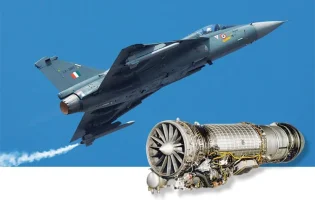
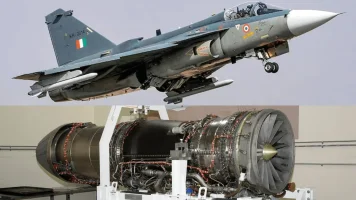
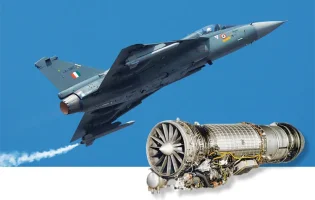
A primary cause for the stalled timeline has been severe disruptions in the supply of F404-IN20 engines from the American aerospace manufacturer, General Electric (GE), which recently missed a critical delivery target in March 2026.
Beyond the engine shortage, the programme is grappling with complex technical challenges surrounding the certification and integration of the Israeli-origin EL/M-2052 AESA radar.
These technological benchmarks must be achieved to guarantee the jet is fully prepared for modern combat scenarios.
Earlier this year, HAL announced that five Tejas Mk1A fighters were assembled and ready for handover, claiming they possessed the primary capabilities outlined in the contract.
Despite these public assurances, defence sources report that several mandatory technical clearances and certifications are still pending.
This discrepancy between the manufacturer's claims of readiness and the actual certification status will be a central point of contention during the upcoming summit.
To help accelerate the induction process, the IAF has agreed to waive certain minor contractual obligations. However, military leadership remains firm that the core operational requirements cannot be bypassed or compromised.
Once HAL successfully demonstrates that these mandatory combat benchmarks have been fulfilled, the IAF stands fully prepared to accept the long-awaited fighter jets into its active fleet.