- Views: 3K
- Replies: 2
The Indian Air Force (IAF) is drastically upgrading its aerial security framework, transitioning its current capabilities into a massive 10-squadron missile shield known as the "Sudarshan Chakra."
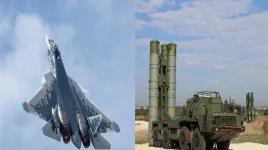
At the heart of this strategy is the allocation of one highly specialised S-400 squadron exclusively meant to protect the National Capital Region (NCR).
This elite unit will not only secure New Delhi but also act as a highly mobile strategic reserve, ready to be swiftly relocated to either the western or northern borders if a military emergency arises.
This ambitious shift towards a comprehensive, theatre-wide air defence grid gained momentum as the IAF moved beyond a limited deployment model toward a nationwide network.
The designated NCR squadron serves a vital dual purpose: it guarantees the static protection of India’s political and strategic headquarters, yet remains flexible enough for rapid forward deployment against sudden threats from Pakistan or China.
This approach highlights a modern military doctrine that balances the steadfast defence of crucial high-value assets with the ability to project power dynamically.
The strategic layout for this missile shield involves a highly calculated geographical distribution to handle threats from multiple directions.
Along the western front, four squadrons will be stationed across the Rajasthan and Punjab sectors. By positioning these systems in key areas like Jodhpur and Pathankot, the IAF can conduct deep surveillance directly into Pakistani airspace.
This placement ensures the early detection and long-range destruction of incoming hostile aircraft, cruise missiles, and other stand-off aerial weaponry, significantly strengthening India's western borders.
To secure the northern borders against China, five squadrons are slated for high-altitude deployment across Arunachal Pradesh, Ladakh, and Sikkim—with a special focus on the strategically vulnerable Siliguri Corridor.
These units are specifically configured to neutralise advanced threats emerging from the Tibetan plateau, including Chinese fifth-generation fighter jets, integrated air defence networks, and long-range precision strike systems.
Placing these systems at higher elevations greatly extends their radar horizon and engagement zones, offering a crucial tactical edge in mountainous landscapes.
India is currently making steady progress in acquiring its initial Russian-made S-400 regiments.
The fourth squadron is scheduled to arrive next month, in May 2026, which notably coincides with the first anniversary of "Operation Sindoor"—a period where India's existing systems reportedly demonstrated exceptional operational performance.
The fifth and final S-400 squadron is expected to be delivered by the end of 2026. Armed with interceptor missiles that can strike targets up to 400 kilometres away, these units will serve as the primary foundation of India’s extended defence perimeter.
However, achieving the full 10-squadron "Sudarshan Chakra" vision requires more than just foreign imports.
India’s homegrown Project Kusha—officially known as the Extended Range Air Defence System (ERADS)—will be vital for completing and sustaining this network.
Developed by the Defence Research and Development Organisation (DRDO) at an estimated cost of ₹21,700 crore, Project Kusha recently achieved a major milestone with the successful initial developmental trials of its M1 interceptor variant in early 2026.
Designed to deliver capabilities on par with the S-400, this domestic program offers a cost-effective alternative while drastically cutting down long-term reliance on external suppliers.
Ultimately, the "Sudarshan Chakra" will operate as a seamlessly integrated, hybrid defence network.
The five imported S-400 units will act as the "heavy hitters," designated to destroy high-value enemy targets at extreme ranges.
Meanwhile, the upcoming indigenous Project Kusha batteries—planned to feature interceptors with ranges of 150 km, 250 km, and up to 400 km—will augment the network by providing crucial depth, scale, and backup.
By the 2028–2030 timeframe, this combination of domestic and imported technology is projected to merge into a singular, impenetrable national missile shield.