- Views: 2K
- Replies: 2
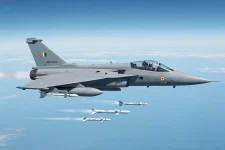
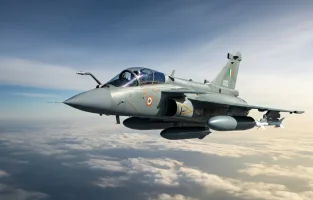
The Indian Air Force (IAF) is making a concerted effort to equip its upcoming Tejas Mk2 fighter jets with the formidable Meteor beyond-visual-range air-to-air missile (BVRAAM).
Equipping the new aircraft with the Meteor is part of a strategic plan to unify India's high-tier aerial combat weapons.
However, bringing this vision to life is currently blocked by a clash between the Tejas Mk2’s domestic design and the strict integration rules enforced by MBDA, the European consortium that manufactures the missile.
The development of the Tejas Mk2 highlights a major leap in India’s quest for self-reliance in the aerospace sector. Designed to replace aging fleets of Mirage 2000s and Jaguars, the new fighter departs from previous iterations.
While the Tejas Mk1 and Mk1A relied heavily on Israeli sensor technologies—specifically the EL/M-2032 and EL/M-2052 radars—the Mk2 is built entirely around the homegrown Uttam Active Electronically Scanned Array (AESA) radar.
Developed by the Defence Research and Development Organisation (DRDO), this advanced sensor boasts roughly 980 transmit/receive modules (TRMs). This powerful setup promises much greater detection ranges, sharper target tracking, and the ability to engage multiple hostile aircraft simultaneously.
By centering the fighter's capabilities around the Uttam radar, the Tejas Mk2 achieves a domestic content level exceeding 80 percent. Yet, this very achievement creates a significant roadblock for adding foreign weaponry like the ramjet-powered Meteor.
Historically, MBDA has tightly guarded its technology, refusing to integrate the Meteor with non-European radar platforms. The company cites the highly sensitive nature of the missile’s encrypted data links, guidance software, and complex radar communication protocols.
Making the Meteor work effectively in combat requires profound synchronization between the missile and the fighter’s core fire control systems.
This usually means sharing critical source codes to ensure the aircraft's radar can communicate flawlessly with the missile's mid-course guidance system while it is flying toward its target.
Because the Uttam AESA is uniquely Indian, MBDA is reportedly hesitant to hand over this level of sensitive access, stalling the technical integration.
In spite of these roadblocks, the IAF is actively negotiating with MBDA to find a middle ground.
One proposed solution is a “black box” approach, which would allow the missile and aircraft to interface and operate together without either side having to reveal their proprietary software secrets.
Another option being weighed involves setting up local manufacturing or fostering closer ties with Indian defence industries to alleviate technology transfer fears.
As of now, a concrete agreement remains elusive, casting doubt on whether the Meteor will be ready for the Tejas Mk2 prototype's initial test flights expected in the coming years.
Interestingly, parallel plans by Hindustan Aeronautics Limited (HAL) suggest that the Meteor might be integrated into a future batch of 97 Tejas Mk1A jets. This indicates that a technical compromise is possible under specific radar configurations.
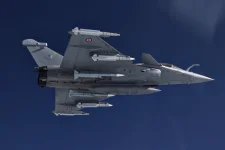
Ultimately, the IAF clearly wants the Meteor to be a standard weapon across its modern fleet, bringing domestic jets in line with the frontline Rafale fighters, which already use the Meteor to dominate long-range aerial engagements.
Meanwhile, India is not putting all its eggs in one basket; domestic missile development is accelerating rapidly to cut down on foreign dependency.
The Astra Mk1, boasting a range of about 110 kilometers, is fully operational and currently forms the backbone of the IAF’s BVRAAM arsenal.
Its successor, the Astra Mk2, is deep into advanced testing. Featuring a new dual-pulse rocket motor, the Mk2 stretches its reach to roughly 160 kilometers and delivers better speed and maneuverability in the final moments of an engagement.
Looking even further ahead, India is developing the Astra Mk3 as a revolutionary domestic alternative.
Expected to utilize Solid Fuel Ducted Ramjet (SFDR) technology, the Mk3 aims to directly match or even surpass the impressive "no-escape zone" capabilities of the European Meteor.
Advancing this domestic project is a strategic imperative for India's defence establishment, as it promises to entirely bypass foreign technology restrictions and secure complete, sovereign control over the nation's airspace.