- Views: 4K
- Replies: 7
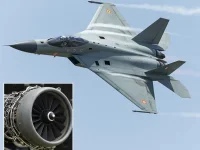
While the Indian government officially green-lit the development of around 120 to 130 Advanced Medium Combat Aircraft (AMCA) in March 2024—enough to equip roughly seven squadrons—the Indian Air Force (IAF) is looking much further ahead.
Long-term strategic planning has shifted its focus toward building a massive fleet of 250 indigenous fifth-generation stealth fighters.
The Catalyst for Expansion
This drive for a larger stealth force is fueled by two pressing realities.First, the IAF must prepare for the impending retirement of its heavyweight champion, the Su-30MKI, which will begin aging out of service in the 2040s. Second, regional rivals are heavily investing in next-generation air power.
Open-source intelligence in 2026 indicates that China’s Chengdu J-20 stealth fighter fleet has expanded at an aggressive pace, with the People's Liberation Army Air Force now operating an estimated 300 of these advanced jets.
A Phased, Three-Tier Fleet
To achieve this 250-aircraft goal, the IAF plans to introduce the AMCA in distinct phases, each featuring upgraded technology and engine power:- AMCA Mark-1 (Approx. 40 jets): This initial batch will be powered by the American GE F414-INS6 engine, delivering 98 kN of thrust. These aircraft will be essential for familiarizing the IAF with stealth operations, training, and early operational readiness.
- AMCA Mark-2 (Approx. 100 jets): Serving as the backbone of the stealth fleet, this variant will rely on a new 110–120 kN engine co-developed by India and France's Safran. The upgraded power will unlock "supercruise" (the ability to fly at supersonic speeds without using fuel-heavy afterburners) and integrate next-generation sensor fusion.
- AMCA Mark-2+ (Approx. 110 jets): A highly advanced future variant equipped with even more powerful engines in the 120–140 kN class. These platforms will serve as the direct replacements for the outgoing Su-30MKI fleet in the mid-2040s.
New Tactics for a Two-Front Threat
A fleet of 250 stealth fighters is deemed critical for managing simultaneous high-intensity threats from both China and Pakistan.With Beijing aggressively deploying advanced surface-to-air missile systems like the HQ-9 along the borders, the IAF aims to maintain a 1:1 ratio of stealth combatants in highly contested airspace, such as Ladakh and Arunachal Pradesh.
In future conflicts, the AMCA will serve as the "spearhead." Entire wings of stealth fighters will be dedicated to neutralizing enemy air defences.
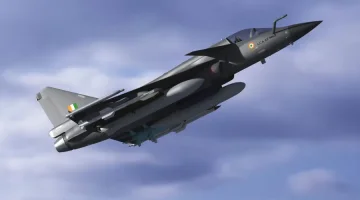
By punching holes in the adversary's radar networks, the AMCA will create safe corridors for heavily armed, non-stealth "bomb trucks"—like the Tejas Mk2 and upgraded Su-30MKIs—to deliver massive payloads without being targeted.
Transforming the Defence Industry
Recognizing the massive scale of delivering 250 stealth fighters, the Ministry of Defence is restructuring how the aircraft will be built.To avoid the production delays that plagued earlier jet programmes, the government is moving away from relying entirely on state-run Hindustan Aeronautics Limited (HAL).
Instead, private industry giants such as Tata Advanced Systems Limited (TASL), Larsen & Toubro (L&T), and Bharat Forge have been shortlisted to form a sprawling, distributed manufacturing ecosystem.
In early 2026, a high-level committee was established to aggressively compress the timeline between prototype testing and mass manufacturing.
With the initial ₹15,000 crore development contract actively funding the creation of five prototypes—and the first expected to roll out around 2028—the IAF’s vision of dominating the skies with 250 stealth fighters is rapidly taking shape.