- Views: 2K
- Replies: 2
The Indian aerospace sector is rapidly advancing its next-generation sensor technology, focusing heavily on passive Infrared Search and Track (IRST) systems.
This move represents a major strategic shift in air combat, prioritizing the ability to spot enemy aircraft without broadcasting radio signals that give away a fighter jet's position.
As the modern battlefield becomes increasingly saturated with electronic warfare and radar-jamming technologies, this silent detection capability is essential for identifying stealth fighters before they can strike.
The core of this new strategy involves combining domestically produced IRST systems with cutting-edge Active Electronically Scanned Array (AESA) radars, a process known as "sensor-level fusion."
In older fighter jets, radars and heat-seeking sensors operated separately, requiring the pilot to manually interpret different screens.
India’s modernized approach feeds both radar and thermal data into a single, advanced mission computer.
Developed by indigenous defence agencies like the Defence Research and Development Organisation (DRDO), this system automatically decides which sensor provides the most accurate tracking information at any given moment.
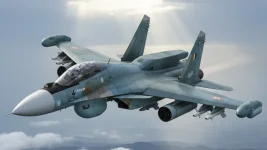
This technology will soon see action in the upcoming "Super Sukhoi" upgrade for the Indian Air Force's fleet of Su-30MKI fighters—a massive modernization project estimated at over ₹60,000 crore.
Hindustan Aeronautics Limited (HAL) and Bharat Electronics Limited (BEL) are replacing the older Russian OLS-30 sensors with a new, long-range indigenous IRST.
This new thermal tracker will pair directly with the powerful indigenous Virupaksha AESA radar to enable a deadly "silent first look." The aircraft will hunt for the heat signatures of enemy jets passively.
Once a target is found, the radar turns on for just a fraction of a second to guide a weapon, drastically reducing the chances of tipping off enemy radar warning receivers.
This tactic is especially effective against stealth aircraft like China's Chengdu J-20, which are built to evade radar but cannot hide the intense heat generated by their engines and airframe friction.
Looking to the future, the 5th-generation Advanced Medium Combat Aircraft (AMCA) project will feature an even more sophisticated setup.
Similar to the technology found on the American F-35 Lightning II, the AMCA will utilize a Distributed Aperture System (DAS).
By placing multiple infrared cameras around the aircraft's body, pilots will gain a seamless, 360-degree view of the sky.
This invisible web will track multiple threats and incoming missiles simultaneously without emitting any detectable signals.
To manage this massive flow of data, early 2026 updates indicate that DRDO is successfully integrating artificial intelligence to sort targets.
The AI algorithms quickly compare thermal flashes against a detailed threat library, instantly distinguishing a dangerous cruise missile or stealth fighter from harmless background clutter like birds or flares, thereby greatly easing the pilot's workload and preventing wasted munitions.
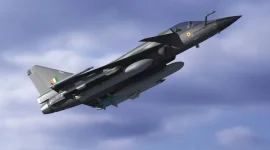
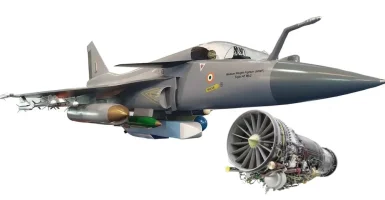
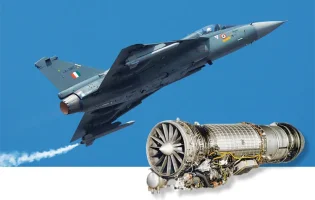
Meanwhile, the highly anticipated Light Combat Aircraft (LCA) Tejas Mk2, which is preparing for its maiden flight around mid-2026, will be India's first fighter to feature a fully integrated internal IRST right off the assembly line.
Powered by the potent GE-F414 engine, the Tejas Mk2 will have its thermal sensor housed cleanly within its nose avionics suite.
Its computer will seamlessly merge the thermal images with data from the indigenous Uttam AESA radar into a single, unified picture.
This allows the jet to automatically switch between heat-tracking and precise radar-ranging depending on the level of enemy jamming.
Moving away from isolated sensors toward a unified, intelligent network marks a monumental leap for India's military aviation.
This modernization matches the current global standards for advanced air combat, where processing information faster than the enemy is just as vital as kinetic speed and firepower.
With regional rivals expanding their stealth capabilities, relying solely on traditional radar is no longer a viable defence strategy.
By heavily investing in multi-sensor fusion and silent tracking, India is ensuring its fighter fleets remain both highly survivable and overwhelmingly lethal in the skies of tomorrow.