- Views: 2K
- Replies: 7
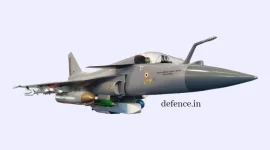
The Indian government has commenced preliminary groundwork for the highly anticipated acquisition of 114 Multi-Role Fighter Aircraft (MRFA) to bolster the Indian Air Force’s (IAF) combat capabilities.
According to defence officials familiar with the developments, the initial discussions are heavily focused on determining the scope of indigenous content and local manufacturing integration.
While the tender is open to global contenders, France’s Dassault Aviation has emerged as the frontrunner, as planners weigh the strategic benefits of expanding the existing Rafale ecosystem over initiating a new logistical stream for a different aircraft type.
This move comes at a critical time when the IAF’s fighter squadron strength has dipped to approximately 29-31 squadrons, well below the authorised strength of 42 required to tackle a two-front threat.
Leveraging an Established Ecosystem
India already operates two squadrons of the Rafale jet and has recently seen the establishment of significant support infrastructure within the country.This includes the dedicated Maintenance, Repair, and Overhaul (MRO) facility — Dassault Aviation MRO India (DAMROI) — situated near the upcoming Noida International Airport in Jewar. Officials view this infrastructure as economically and militarily vital.
Expanding the fleet through the MRFA programme is increasingly seen as a pragmatic extension of these assets.
By building upon the existing logistics network, the IAF could achieve faster induction rates and significantly lower lifecycle costs compared to onboarding a completely new platform such as the American F-21 or the Swedish Gripen-E.
Focus on 'Make in India' and Indigenous Content
A central pillar of the current deliberations is the extent of domestic manufacturing.In line with the Ministry of Defence’s stringent "Make in India" directives, the upcoming deal is expected to mandate a high percentage of indigenous content.
Discussions are reportedly centred on ensuring that a substantial portion of the 114 jets — potentially up to 96 aircraft — are manufactured in India.
This groundwork involves detailed planning for the production of critical components, avionics, and electronic warfare suites by Indian partners.
The ecosystem is already being seeded; for instance, Tata Advanced Systems Limited (TASL) in Hyderabad is currently manufacturing Rafale fuselages for the global supply chain.
The MRFA programme aims to scale this into full assembly and systems integration, leveraging capabilities across both public defence undertakings and the private sector.
Operational and Logistical Synergy
From an operational standpoint, military planners argue that acquiring 114 additional Rafales would standardise the fleet, simplifying the force structure.Operating a single dominant type allows for commonality in training pipelines for pilots and technicians, as well as interchangeable weaponry and spares.
This homogenisation is expected to boost fleet availability rates, a persistent challenge when managing a diverse inventory of Russian, French, and British platforms.
Introducing a distinct new fighter type at this stage would necessitate parallel, capital-intensive investments in new simulators, hangars, and supply chains — a complexity the IAF is keen to avoid given its urgent requirement to arrest the fall in squadron numbers.
Strategic Reliability
France’s position is further buttressed by the proven performance of the 36 Rafales already in service with the IAF.The platform has demonstrated high serviceability and has been rapidly successfully integrated into India’s operational ethos.
Furthermore, the recent selection of the Rafale-M (Marine) for the Indian Navy creates a cross-service synergy that few other contenders can match.
The presence of the in-country MRO hub signals a long-term commitment from the Original Equipment Manufacturer (OEM), providing a solid foundation for deeper technology transfer and high-value indigenous addition should this large-scale order be finalised.