- Views: 2K
- Replies: 6
As the global race to develop next-generation combat aircraft intensifies in early 2026, India is maintaining a careful strategic balance.
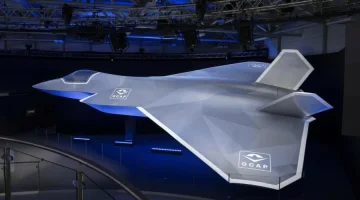
While closely monitoring the Global Combat Air Programme (GCAP)—a joint sixth-generation fighter project between the United Kingdom, Japan, and Italy—New Delhi is prioritising its own domestic aviation goals.
Although a full partnership in GCAP is currently unlikely, discussions regarding an observer role are gaining momentum.
The Barrier to Full Partnership
In early 2025, nations like Japan and the UK expressed strong interest in bringing India into the GCAP fold.For Tokyo, an Indian partnership offered a way to share massive development costs while strengthening security alliances across the Indo-Pacific.
However, the Indian Ministry of Defence opted for caution. Becoming a primary partner would require a multi-billion-dollar commitment, potentially starving domestic projects like the Advanced Medium Combat Aircraft (AMCA) of crucial funds.
Furthermore, the core GCAP members solidified their alliance in late 2025 by creating "Edgewing," a joint corporate venture between BAE Systems, Leonardo, and Mitsubishi Heavy Industries.
This move strictly locked in production shares to meet a tight 2035 deployment deadline. Consequently, the door is effectively closed to new full-tier members who might disrupt the schedule or demand significant domestic manufacturing rights.
The Pragmatism of Observation
Given these financial and structural constraints, New Delhi is leaning towards a more practical approach: seeking observer status.This low-risk position would allow India to monitor the development of cutting-edge sixth-generation technologies without the massive financial burden.
By observing the GCAP (often referred to by its UK project name, Tempest), Indian scientists and military planners could gain valuable insights into advanced stealth, artificial intelligence, directed energy weapons, and drone-teaming concepts known as "loyal wingmen."
This knowledge could then be directly channelled into upgrading the AMCA and laying the groundwork for India's own future sixth-generation defence platforms.
Domestic Focus: Advances in the AMCA Programme
While keeping an eye on international developments, India's domestic fighter programme is making significant, tangible strides.In February 2026, the Defence Research and Development Organisation (DRDO) and the Aeronautical Development Agency (ADA) selected private industry groups to construct the first AMCA prototypes.
The competitors include a standalone bid from Tata Advanced Systems, alongside consortia led by Larsen & Toubro (partnered with Bharat Electronics) and Bharat Forge (partnered with BEML and Data Patterns).
This public-private collaboration is a major milestone for the AMCA, which is designed as a 5.5-generation fighter. It aims to bridge the gap between current stealth jets and future fighters by integrating heavy AI, sensor fusion, and network-centric warfare capabilities.
The Engine Equation
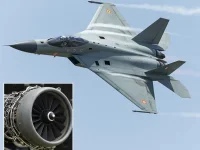
A major hurdle for the AMCA remains the development of a suitable indigenous jet engine.While the initial Mk1 variants will rely on existing American GE F414 engines, India is actively working to co-develop a more powerful 110-130kN engine with France's Safran for the advanced AMCA Mk2.
If the French partnership encounters difficulties, India could potentially turn to Britain's Rolls-Royce, a key engine developer for the GCAP. However, a notable limitation is that India's currently planned engines will not feature "adaptive-cycle" technology.
This revolutionary capability—which allows an engine to seamlessly alternate between high thrust for combat and high fuel efficiency for cruising—is a hallmark of the sixth-generation fighters that GCAP is aggressively pursuing.
Global Shifts Validate India's Strategy
India's decision to focus on the AMCA while maintaining "strategic patience" with international programmes appears increasingly sound when viewing the broader European landscape.The competing European sixth-generation project, the Future Combat Air System (FCAS) led by France, Germany, and Spain, is currently facing significant internal friction.
Recent reports from February 2026 indicate that Germany is contemplating a shift towards GCAP as the FCAS negotiations stall.
For India, this international volatility highlights the wisdom of securing its own domestic defence manufacturing capabilities rather than overcommitting to complex and fluid foreign alliances.