India Considers GCAP Observer Role to Boost Indigenous AMCA and 6th-Gen Development

India Considers GCAP Observer Role to Boost Indigenous AMCA and 6th-Gen Development


As the global race to develop next-generation combat aircraft intensifies in early 2026, India is maintaining a careful strategic balance.

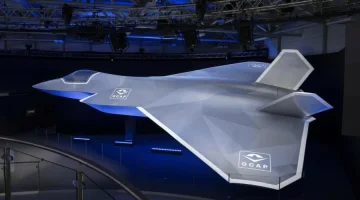
While closely monitoring the Global Combat Air Programme (GCAP)—a joint sixth-generation fighter project between the United Kingdom, Japan, and Italy—New Delhi is prioritising its own domestic aviation goals.

Although a full partnership in GCAP is currently unlikely, discussions regarding an observer role are gaining momentum.

The Barrier to Full Partnership​

In early 2025, nations like Japan and the UK expressed strong interest in bringing India into the GCAP fold.

For Tokyo, an Indian partnership offered a way to share massive development costs while strengthening security alliances across the Indo-Pacific.

However, the Indian Ministry of Defence opted for caution. Becoming a primary partner would require a multi-billion-dollar commitment, potentially starving domestic projects like the Advanced Medium Combat Aircraft (AMCA) of crucial funds.

Furthermore, the core GCAP members solidified their alliance in late 2025 by creating "Edgewing," a joint corporate venture between BAE Systems, Leonardo, and Mitsubishi Heavy Industries.

This move strictly locked in production shares to meet a tight 2035 deployment deadline. Consequently, the door is effectively closed to new full-tier members who might disrupt the schedule or demand significant domestic manufacturing rights.

The Pragmatism of Observation​

Given these financial and structural constraints, New Delhi is leaning towards a more practical approach: seeking observer status.

This low-risk position would allow India to monitor the development of cutting-edge sixth-generation technologies without the massive financial burden.

By observing the GCAP (often referred to by its UK project name, Tempest), Indian scientists and military planners could gain valuable insights into advanced stealth, artificial intelligence, directed energy weapons, and drone-teaming concepts known as "loyal wingmen."

This knowledge could then be directly channelled into upgrading the AMCA and laying the groundwork for India's own future sixth-generation defence platforms.

Domestic Focus: Advances in the AMCA Programme​

While keeping an eye on international developments, India's domestic fighter programme is making significant, tangible strides.

In February 2026, the Defence Research and Development Organisation (DRDO) and the Aeronautical Development Agency (ADA) selected private industry groups to construct the first AMCA prototypes.

The competitors include a standalone bid from Tata Advanced Systems, alongside consortia led by Larsen & Toubro (partnered with Bharat Electronics) and Bharat Forge (partnered with BEML and Data Patterns).

This public-private collaboration is a major milestone for the AMCA, which is designed as a 5.5-generation fighter. It aims to bridge the gap between current stealth jets and future fighters by integrating heavy AI, sensor fusion, and network-centric warfare capabilities.

The Engine Equation​

A major hurdle for the AMCA remains the development of a suitable indigenous jet engine.

While the initial Mk1 variants will rely on existing American GE F414 engines, India is actively working to co-develop a more powerful 110-130kN engine with France's Safran for the advanced AMCA Mk2.

If the French partnership encounters difficulties, India could potentially turn to Britain's Rolls-Royce, a key engine developer for the GCAP. However, a notable limitation is that India's currently planned engines will not feature "adaptive-cycle" technology.

This revolutionary capability—which allows an engine to seamlessly alternate between high thrust for combat and high fuel efficiency for cruising—is a hallmark of the sixth-generation fighters that GCAP is aggressively pursuing.

Global Shifts Validate India's Strategy​

India's decision to focus on the AMCA while maintaining "strategic patience" with international programmes appears increasingly sound when viewing the broader European landscape.

The competing European sixth-generation project, the Future Combat Air System (FCAS) led by France, Germany, and Spain, is currently facing significant internal friction.

Recent reports from February 2026 indicate that Germany is contemplating a shift towards GCAP as the FCAS negotiations stall.

For India, this international volatility highlights the wisdom of securing its own domestic defence manufacturing capabilities rather than overcommitting to complex and fluid foreign alliances.
 
India may join Tempest 6th Generation plane consortium instead of French though 10th Generation technologies have already given by me including engine metallurgy technologies surpassing all world includes China, USA, British, French. The French are worst in Engine technologically while Japanese and Rollce Royce are ahead of France and USA. with FCAS India has only Geometry gains.
 
Last edited:
I'm not sure what 'observer status' regarding GCAP entails.

While little info about GCAP is released officially, last thing I heard unofficially was that the engine for GCAP is not going to be variable/adaptive cycle for schedule risk reasons. I have no idea if such is the case or not. Perhaps more info will be released officially once the development programme is launched.
 
Gcap seems more advanced technologically but france's project would work seamlessly with the rafales.

I reckon we go with france but if they don't offer Good terms (not TOT, full on co development) we cancel the rafale deal buy some su-57 as stop gap measure and go full in with japan and u.k

waiting for indigenous plane seems foolish. We are getting left behind, the TOT approach and then trying to manufacture indigenous product is not working and delivers outdated hardware way past it's deadline.

Approach needs to change
 
Gcap seems more advanced technologically but france's project would work seamlessly with the rafales.

I reckon we go with france but if they don't offer Good terms (not TOT, full on co development) we cancel the rafale deal buy some su-57 as stop gap measure and go full in with japan and u.k

waiting for indigenous plane seems foolish. We are getting left behind, the TOT approach and then trying to manufacture indigenous product is not working and delivers outdated hardware way past it's deadline.

Approach needs to change
I agree that France would be a better idea than GCAP.

I don't think that either France or GCAP would be prepared to accept the terms that India would like (the downside) but IAF would get a 6G aircraft many, many years earlier than if it were developed in India (the upside).

Threatening France with Rafale cancellation if terms were not acceptable? While I'm sure that Dassault would make enormous profits on the deal, I think their negotiators would be very aware that cancellation of a Rafale deal would be disastrous for IAF and that their negotiators would play their hand accordingly.
 
I think this won't help. What is required is a aircraft with complete technology which we can independently also export to other countries and recover our cost of 30-50 Squadrons and save our tax payer money. So, only take up any opportunity where full transfer of hardware software integration of any missile or source code etc can be done unrestricted
 
I agree that France would be a better idea than GCAP.

I don't think that either France or GCAP would be prepared to accept the terms that India would like (the downside) but IAF would get a 6G aircraft many, many years earlier than if it were developed in India (the upside).

Threatening France with Rafale cancellation if terms were not acceptable? While I'm sure that Dassault would make enormous profits on the deal, I think their negotiators would be very aware that cancellation of a Rafale deal would be disastrous for IAF and that their negotiators would play their hand accordingly.
Now i agree they would have trouble accepting such conditions especially france since they pulled out eurofighter*partly* because of it.

But still doesn't change the fact all of the programs are having financial troubles and requirement differences. Especially Germany and France.

But that's something they need to look above, the money, talent and manufacturing capacity to lower the price plus the orders we will place far outways it. No country besides china and usa can match it.

On the TOT point they have to get over it regardless. Dassault was having difficulty sharing tech with Germany anyways, what's the point if the point of problem is replaced by india.

They are already doing doing significant TOT and co-devlopment in rafale deal opening india manufacturing lines. The entire development would go a hell of a lot smoother with us then with Germany (opinion)

And to the rafale point, yes I agree we are too deep into this and if we pull out would be disastrous for us. But that doesn't change the fact it's a massively great deal for them. They want the deal far more then us. Just see macron in his last india trip haven't seen a leader behave so pro india in my lifetime lol. Overall it is definitely a net positive in our direction for leverage.

And besides is there isn't FULL CO DEVELOPMENT there is no point in us even joining. Put 40-50 billions into our defence industrial complex something half decent will come out either way.
 

Forum statistics

Threads
6,724
Messages
64,174
Members
5,125
Latest member
venkatkorasiga
Back
Top