Paninian Aerospace, an emerging deep-tech firm based in India, has unveiled a bold roadmap for domestic aerospace propulsion that reaches far beyond its current projects.
The company has revealed plans to develop a 12.5 kilonewton (kN) turbofan engine to power its future SVAYATT-M1, a next-generation autonomous combat drone.
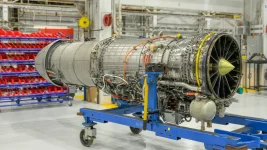
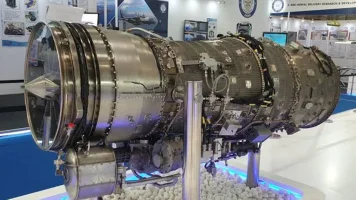
This larger engine will be built entirely in-house, leveraging the foundational work from its ongoing 4.5 kN "Yantur" engine programme, which is primarily focused on cruise missile propulsion.
This development highlights a major shift in Paninian’s strategic goals. It establishes the startup as one of the rare private aerospace companies in India aiming to create a comprehensive family of military turbofan engines across different thrust categories.
While the initial 4.5 kN engine—designated for platforms like the Svayatt L1 cruise missile—will cater to unmanned systems and long-range weapons, the jump to a 12.5 kN engine marks a decisive entry into the domain of jet-powered Unmanned Combat Aerial Vehicles (UCAVs).
A Stepping-Stone Approach to Engine Development
Paninian is employing a structured, phase-by-phase strategy to master aero-engine manufacturing.By first engineering the compact 4.5 kN Yantur turbofan, the company is proving out essential technologies. These include digital engine controls, advanced manufacturing techniques, high-temperature combustors, and complex turbine sections.
Once these core systems are validated, the architecture can be scaled up to meet the demands of a much more powerful engine.
This step-by-step methodology closely tracks the development cycles used by established global aerospace giants, where smaller engines act as active testing grounds before larger variants are produced.
If successful, graduating to a 12.5 kN engine will represent a historic technological breakthrough for India’s private defence sector.
The SVAYATT-M1: Powering the Next Generation
The upcoming 12.5 kN engine is specifically tailored for the SVAYATT-M1, a platform billed as an affordable, next-generation autonomous aircraft.While Paninian has kept the precise physical dimensions of the drone under wraps, the choice of a 12.5 kN engine (generating roughly 2,810 pounds of thrust) offers clear clues about the aircraft's intended capabilities.
Engines in this thrust bracket are perfectly sized for medium-weight UCAVs, Collaborative Combat Aircraft (CCA), and "loyal wingman" drones.
These platforms are built to fly alongside crewed fighter jets in contested airspace or carry out autonomous strikes in highly dangerous environments.
Estimated Size and Performance Metrics
Based on the requirements of modern military drones, a single-engine aircraft utilising a 12.5 kN powerplant would likely have a Maximum Take-Off Weight (MTOW) ranging between 2.5 and 4.5 tonnes.How the SVAYATT-M1 is ultimately configured will dictate its strengths:
- Lighter Configurations: If kept near the 2.5-tonne mark, the drone would boast rapid acceleration and high manoeuvrability, making it ideal for air-to-air engagements alongside crewed jets.
- Heavier Configurations: Pushing towards 4.5 tonnes would allow for larger internal fuel tanks and weapon bays, optimising the drone for long-endurance patrols, heavy precision strikes, or extensive electronic warfare payloads.
Expanding Mission Capabilities
The integration of the 12.5 kN engine will allow the SVAYATT-M1 to execute a diverse array of critical military operations, such as:- Collaborative Combat: Flying as a loyal wingman alongside crewed fighter aircraft.
- Strategic Strikes: Delivering precision munitions from stand-off distances.
- Air Defence Suppression: Locating and destroying enemy radar and surface-to-air missile sites (SEAD/DEAD).
- Intelligence Gathering: Conducting long-range surveillance and reconnaissance (ISR).
- Electronic Warfare: Jamming enemy signals and relaying secure communications.
- Maritime Patrol: Securing naval perimeters and tracking sea-based targets.
Energising India’s Private Defence Sector
Paninian’s engine roadmap is a clear indicator of the Indian private sector's expanding influence in aerospace engineering.Historically, the design and production of military turbofans in India have been strictly managed by state-run organizations like the DRDO.
The rise of privately funded initiatives like Paninian's Yantur programme injects vital innovation and industrial manufacturing capacity into the nation's defence ecosystem.
To accelerate this vision, Paninian—led by founder Raghu Adla and advised by seasoned veterans like former CEMILAC Group Director Dr. G. Gouda—recently initiated a $3 million funding round. This capital is aimed at fast-tracking subsystem qualification and full-engine validation.
Designing a military-grade turbofan is considered one of the hardest engineering challenges in the world, requiring deep expertise in aerodynamics, precision manufacturing, and materials science.
By deliberately focusing on a 4.5 kN engine before taking on the 12.5 kN derivative, Paninian is utilizing a smart, risk-reducing strategy that greatly enhances its chances of delivering a fully indigenous, combat-ready propulsion system.